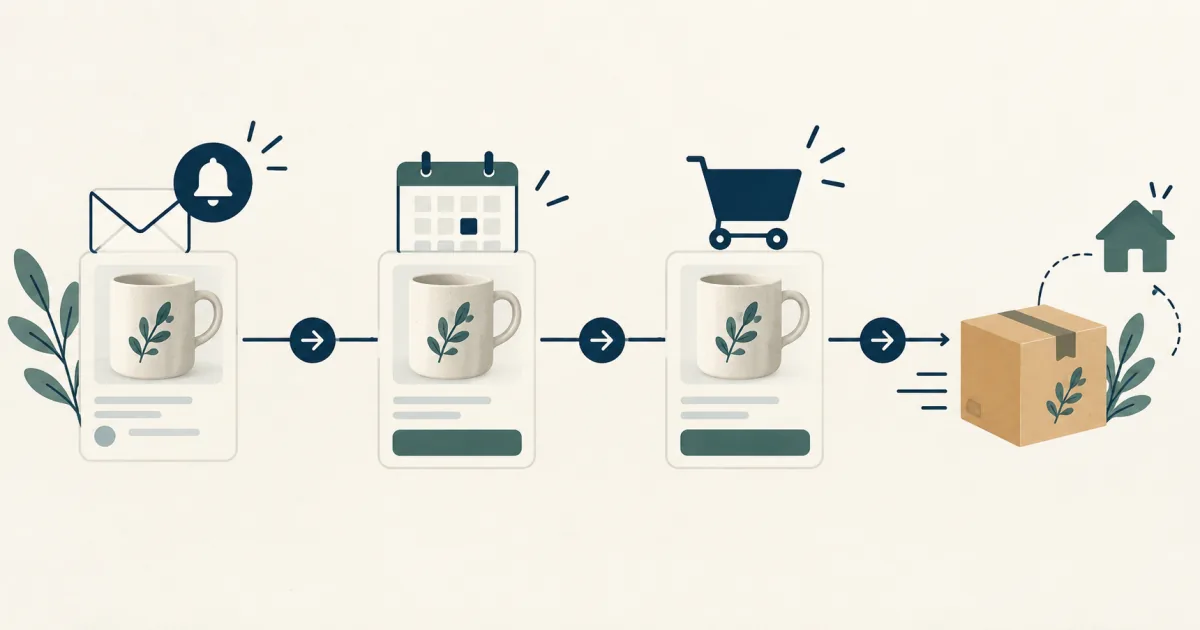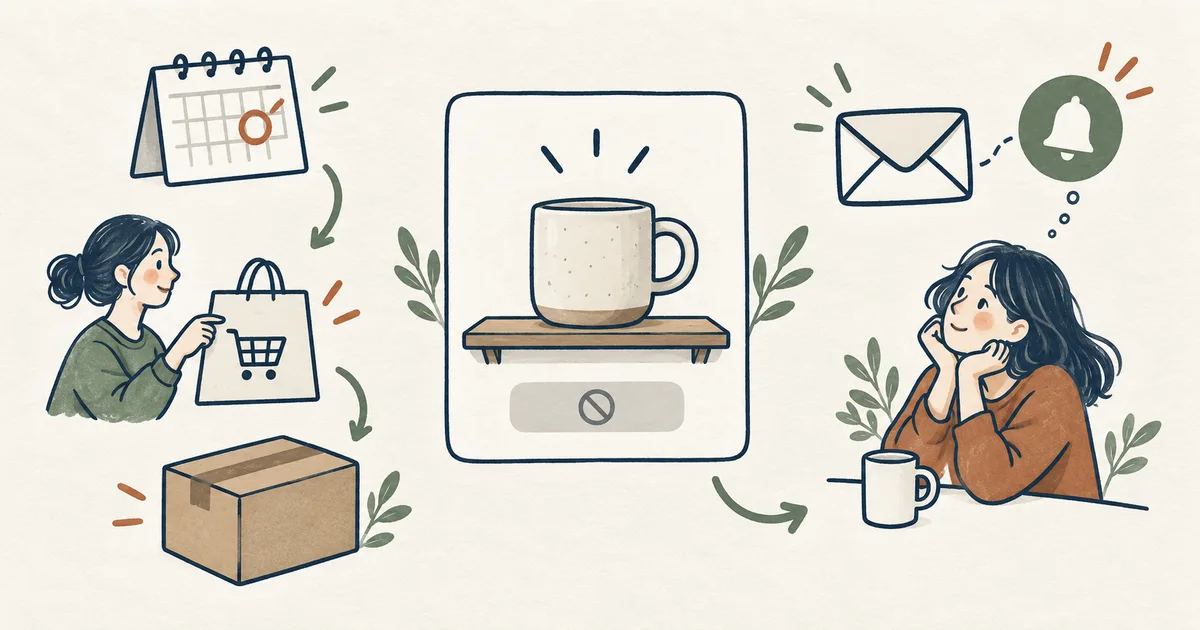
After a popular product sells out, do you find yourself answering the same question: “When can I buy it again?”
If the product page only says “Sold out,” customers cannot tell whether to wait or look elsewhere. But accepting orders before you know the next restock date can create another problem: you cannot give a reliable shipping estimate, and customer support becomes harder.
If you can share the next restock window, take pre-orders. If you cannot, offer restock alerts. Separating these two cases makes it easier to decide what customers should see after a sellout.
Choose based on whether you know the restock timing
Pre-orders and restock alerts ask customers to do different things.
| Product status | Best option | What the customer does |
|---|---|---|
| You can provide a restock or shipping estimate | Pre-order | Places an order |
| The restock timing is still unknown | Restock alert | Registers an email address and waits |
For example, if a core product is confirmed to return next month, you can accept pre-orders and show the expected shipping window. If the supplier has not confirmed its next delivery, it is more practical to collect restock-alert signups without taking orders.
You do not need one rule for every product. Decide product by product based on the restock outlook, the number of orders you can handle, and how you will respond to questions.
A pre-order is an order; a restock alert is an email signup
A pre-order creates an order immediately. Payment follows your store’s Shopify settings, while your store remains responsible for preparing and shipping the product and handling cancellations or refunds. You also need to contact customers if the restock is delayed.
A restock alert does not create an order. The customer registers an email address and waits to hear when the product is back. A notification does not guarantee a later purchase, but it lets you stay in touch with interested customers without promising a restock date.
Do not ask only whether you can keep accepting orders after a sellout. Also ask whether you can explain when those orders will ship.
With SellRules, decide what appears when inventory reaches zero
SellRules stockout rules let you choose one of three destinations for a product when its inventory reaches zero:
- Pre-order
- Made to order
- Restock alerts only
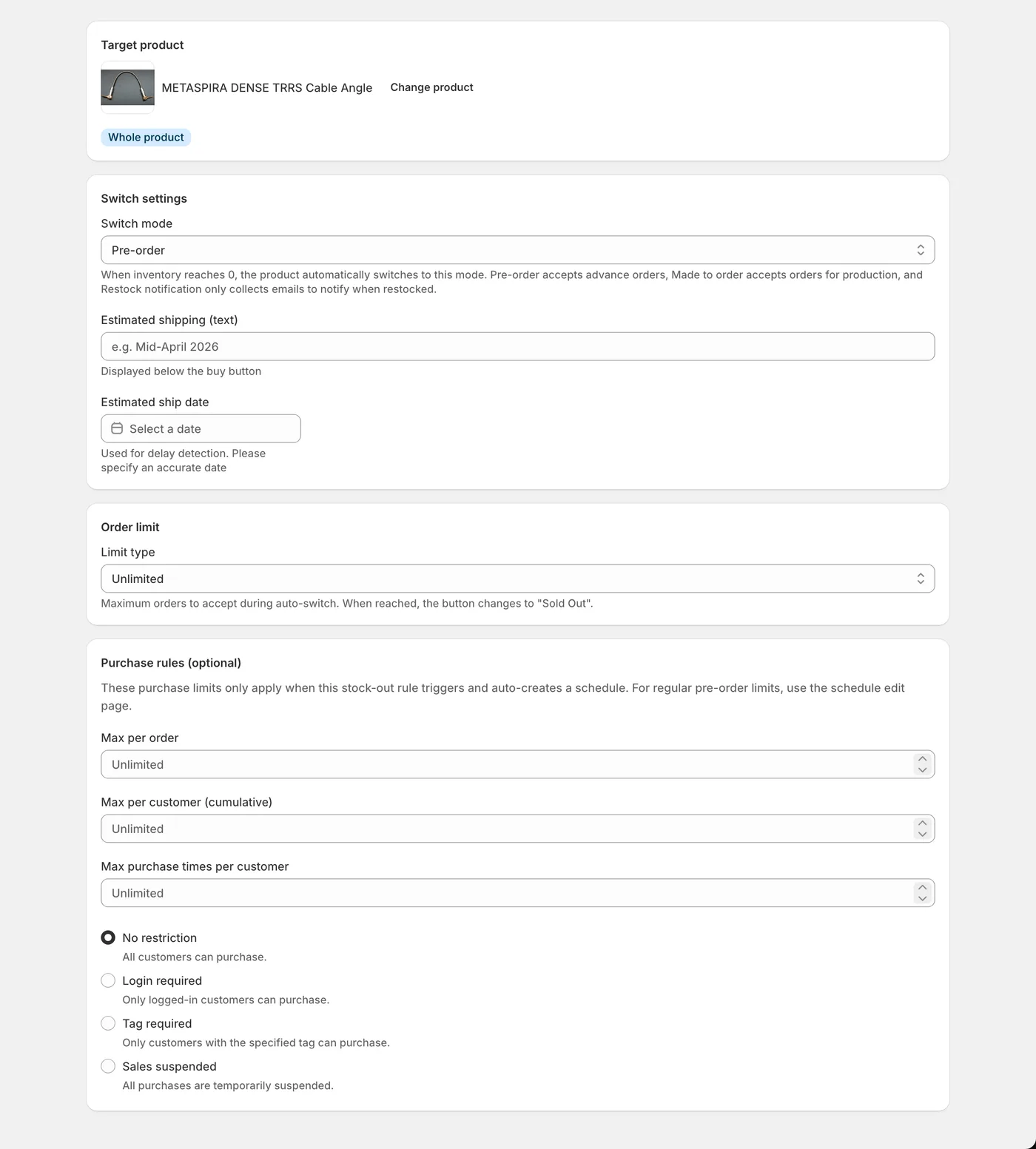
Choose pre-order to accept advance orders on the product page. Choose restock alerts only to collect email signups without accepting orders. When inventory returns to one or more, the automatically created sales setting is removed and the product returns to regular sales. Customers who registered for a restock alert receive an email when the item is available again.
This reduces the work of editing the product page after every sellout and contacting registered customers one by one after a restock.
To use a stockout rule, Shopify must be tracking inventory for the product. If the product already has a manually created sales schedule, that schedule takes priority.
Start with one sold-out product
Instead of applying the rule to your whole catalog at once, begin with one product whose next restock status you understand.
- Choose the message after sellout. Use pre-order if you can explain the restock timing; use restock alerts if you cannot yet do so.
- Create a stockout rule in SellRules. Select a product or variant and choose the switch mode. If you will accept pre-orders, also set the estimated shipping details and an order limit.
- Check the customer experience. Set a test product’s inventory to zero and check its button or signup form. After restoring inventory, confirm that regular sales return and review the notification result.
The SellRules guide covers each screen and its important conditions. Test the behavior with a test product before applying it to a live item.
Shopify’s standard settings may be enough
If you only need to keep taking orders at zero inventory and can manage the product-page message and shipping estimates yourself, Shopify’s standard Continue selling when out of stock setting may be sufficient.
SellRules is useful when you want different products to use pre-orders or restock alerts, or when you do not want to switch the product manually every time inventory runs out and returns.
Frequently asked questions
Does a restock-alert signup create an order?
No. It only records an email address; it is not an order. After receiving the restock message, the customer still needs to complete a purchase.
Can I take pre-orders before the restock date is known?
SellRules can switch a sold-out product to pre-order, but accepting orders without a shipping estimate is not recommended. Use restock alerts while the timing is uncertain, then begin taking pre-orders when you can provide a reasonable estimate.
How much does SellRules cost?
The Launch plan is US$7.99 per month with a 10-day free trial. Charges apply if you continue after the trial. Confirm the price and trial terms on the installation screen as well.
Decide the next step for each sold-out product
Turning a sellout into a future order does not mean making every item available for pre-order. The right message depends on the restock outlook.
Start with one product and see whether pre-orders or restock alerts fit it better.
See pre-orders and restock alerts in SellRules
If you already know which option you need, you can start a 10-day free trial from the Shopify App Store.
Features and pricing checked September 13, 2026, using the Shopify App Store listing and the official guide.