
“Please let me know when it’s back in stock.” Do you search for the right customer’s email and reply every time new stock arrives?
Finding contact details while preparing orders takes time. On a busy day, you may also miss someone even though you thought you had sent the notice.
With SellRules back-in-stock notifications, customers can enter their email address on the product page and receive an automatic notice when stock returns. It saves you from making contact notes and individual emails from scratch each time.
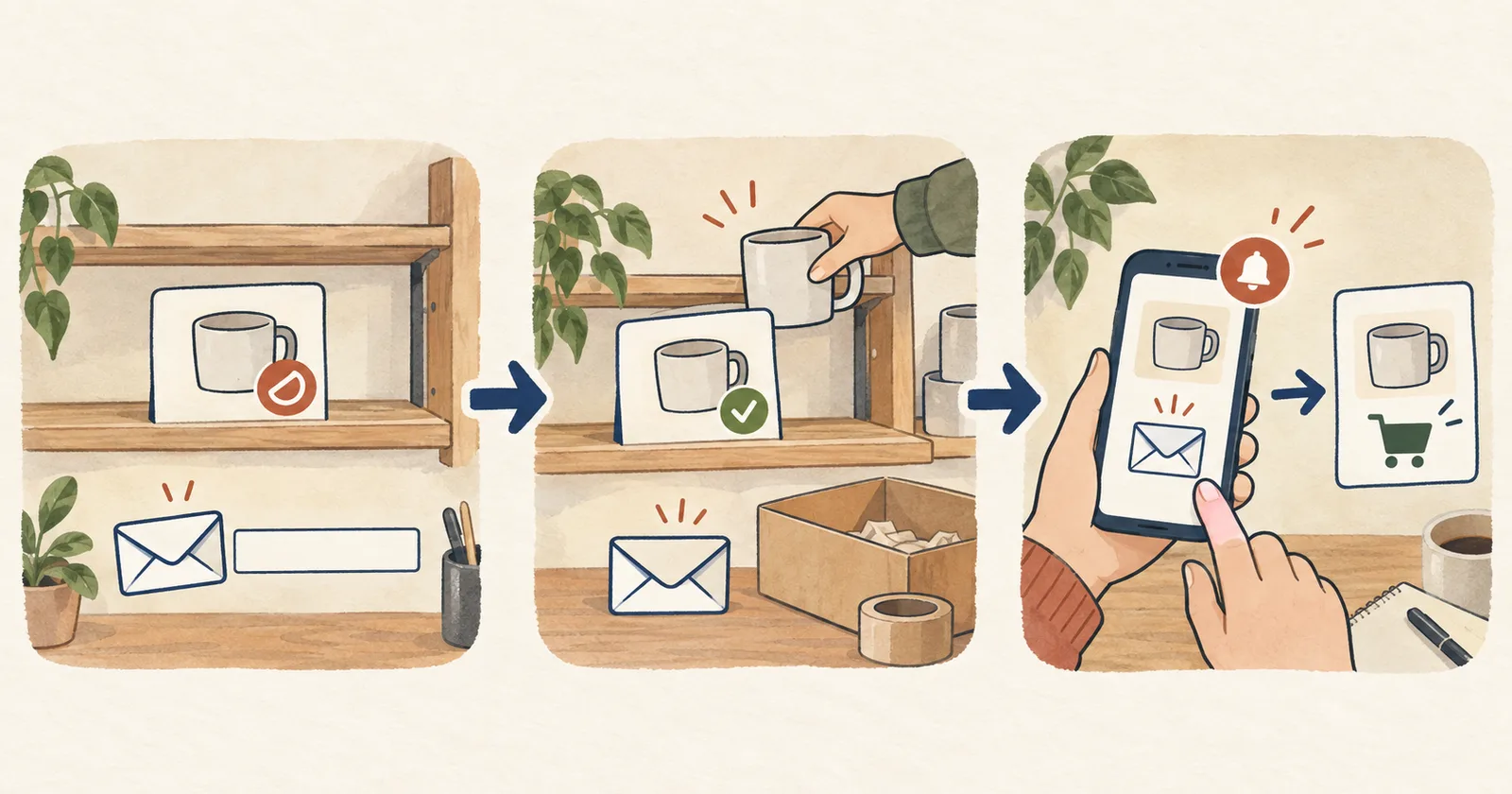
Customers sign up and wait while the shop prepares the restocked product
Imagine a shop whose popular mugs have sold out. If the next restock date is not set yet, it may be better to invite customers to “receive a back-in-stock notice” than to accept orders while promising a shipping date.
Customers enter their email address and wait. When the product is restocked, they receive an email, visit the product page, and decide whether to purchase.
At this stage, no pre-order or reservation has been placed. The notice only says, “It is now available to buy”; it does not reserve an item or guarantee a purchase, so add an explanation to the signup area that makes the difference clear.
Start by testing one product with your own email address
1. Choose the product whose restock you want to announce
Create an out-of-stock rule for the product in SellRules and choose “back-in-stock notifications only” as the next mode. If inventory differs by color or size, also confirm which variant the rule covers.
To switch based on inventory, Shopify must be tracking inventory for the product. If the product already has a manual sales schedule, that schedule takes priority, so starting with a test product whose settings are easy to understand makes the setup smoother.
2. Sign up from the customer view
Set the test product’s inventory to 0 and check that the notification signup area appears on the product page. Use your own email address for the signup and proceed while making sure no test email is sent to actual customers.
The important part is checking that signup works on the actual product page, not only setting it in the admin. If the signup area does not appear, check that SellRules’ “app embed” is turned on for the theme you use.
3. Restore inventory and check the notice
With notification signup from an out-of-stock rule, returning inventory to 1 or more switches the product back to regular sales and sends a back-in-stock notice to registered customers. Open the email you receive and confirm that it leads to the intended product.
The actual screens are collected in the SellRules user guide. After the test is complete, you can extend the setup to products in your live store.
If the email does not arrive, check in this order
First, check for a typo in the address you entered and look in the spam folder. Next, confirm that the selected product, color, and size are correct, that the restock conditions are met, and that notifications are enabled.
Before sending the same message again, check the signup status and sending result in the admin. If you cannot identify the cause, tell support the product, signup time, and screen you checked so they can explain it more easily. You do not need to post customers’ personal information in a public place.
For shops that want fewer one-off messages
SellRules suits shops that do not want to manage contact with people waiting for a restock by hand each time. In addition to collecting notification signups, you can switch to pre-orders for products where that approach fits.
The Launch plan costs 7.99 US dollars per month and includes a 10-day free trial. You will be charged if you continue using it after the free trial. Check the price and trial terms on the signup screen as well.
Start by checking that one product accepts a signup and that the notice reaches you. Once you understand the flow, you can begin guiding customers who are waiting for the next restock.
Feature and pricing references: SellRules overview, Shopify App Store and user guide. Checked: September 14, 2026.
Related articles: Deciding on early-access and limited sales