Shipping Included or Charged Separately: How It Changes How Your Shop Sells
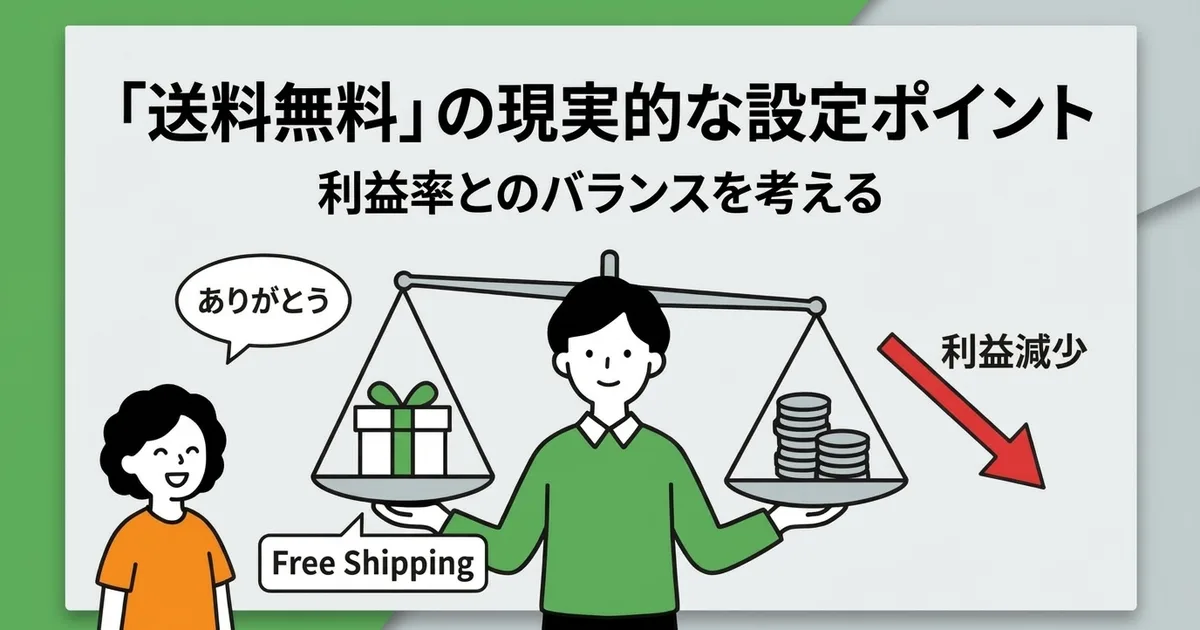
For items above about 3,000 yen, rolling shipping into the price (and showing free shipping) tends to protect profit. At around 1,000 yen, charging shipping separately usually holds up better. The key is the ratio of shipping cost to item price.
This article looks at how each approach affects conversion and margin for small shops, and lays out a way to make the call with intention instead of guesswork.
The honest answer is that neither is universally right — it depends on the balance between product price and shipping cost. But customer psychology has clear patterns, and once you factor those in, you can make an informed choice.
In my own Shopify store I sell items at very different price points, from TRRS cables to resin keycaps, so "include or separate" is something I reconsider with every new listing. Below, I compare the two approaches and share the criteria I actually use as a small-shop operator.
The Psychological Effect of “Free Shipping”
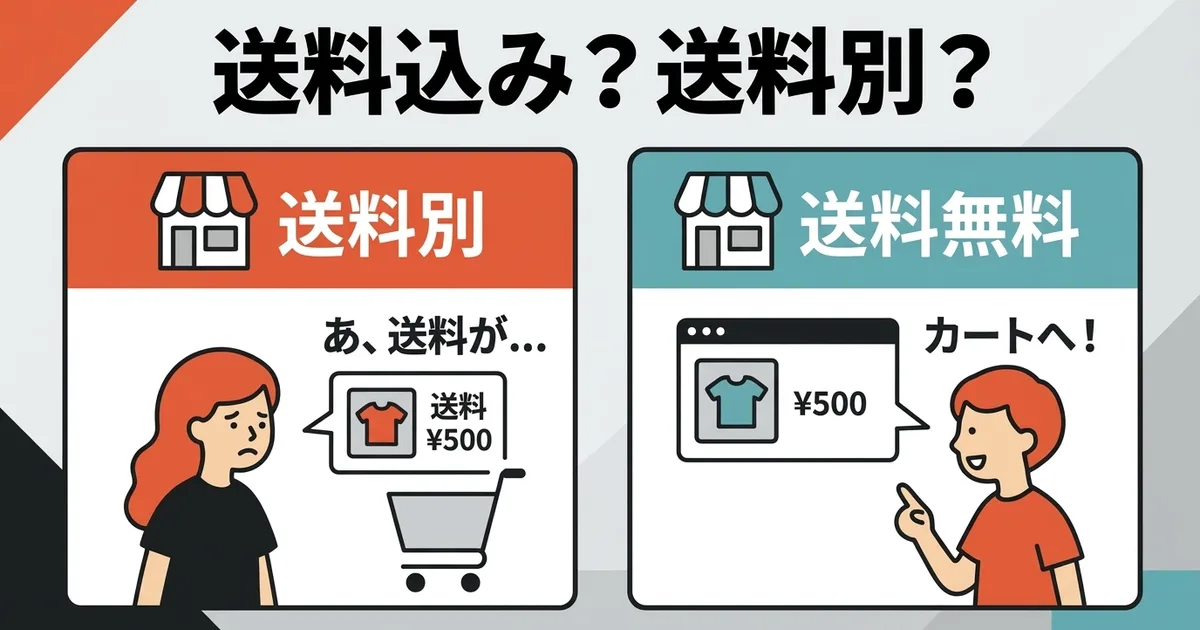
Customers often react badly to extra cost appearing at checkout
One of the main reasons for cart abandonment in ecommerce is unexpected additional cost. A product may look reasonably priced on the product page, but once shipping is added at checkout, the final total feels more expensive than expected.
If shipping is already included in the displayed price, that jump does not happen, which can reduce the chance of abandonment.
“Free” changes how people feel, even when the total is the same
Shipping: 185 yen and Free shipping with a price that is 185 yen higher can result in the same total amount paid. But the “free shipping” version usually feels easier to accept.
That reaction is psychological rather than purely rational, which is exactly why so many ecommerce sites lean heavily on free-shipping messaging.
Comparing Included Shipping and Separate Shipping
| Item | Shipping included, shown as free | Shipping charged separately |
|---|---|---|
| Customer impression | Feels reassuring because there is no extra fee later | Total rises at checkout |
| Cart abandonment | Often lower | Often higher |
| Product-page appearance | Item price looks higher | Item price looks lower |
| Profit visibility | Shipping cost is hidden inside pricing | Product price and shipping are clearly separated |
| Price competitiveness | May look expensive next to competitors | Can look cheaper in search results |
| Multi-item purchases | May over-collect shipping unless adjusted | Easier for customers to understand logically |
There is no universal winner. The best option depends on price range, customer expectations, and how your store operates.
Use the Ratio Between Product Price and Shipping Cost
One of the clearest ways to decide is to look at how large shipping is relative to the product price.
When the shipping share is small
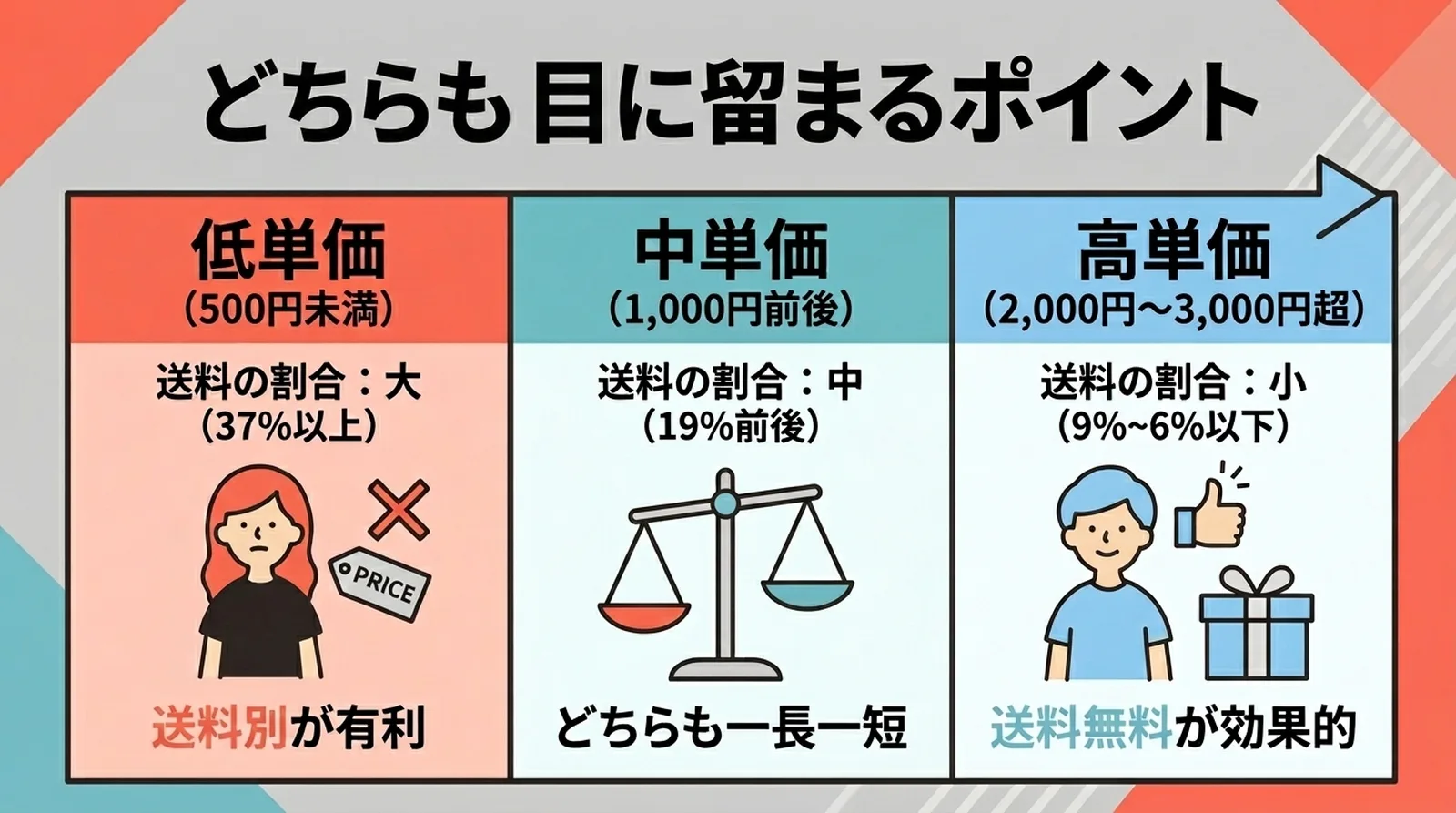
If the item is 3,000 yen and shipping is 185 yen, shipping is only about 6% of the item price. In cases like this, increasing the visible item price slightly to show “free shipping” often has only a small effect on perceived price.
When the shipping share is large
If the item is 800 yen and shipping is 185 yen, shipping is about 23% of the item price. In that case, rolling the full amount into the product price makes the listing look significantly more expensive.
A simple rule of thumb
| Product price | Shipping ratio, assuming 185 yen | Tendency |
|---|---|---|
| 500 yen or less | 37% or more | Separate shipping often makes price feel lighter |
| Around 1,000 yen | About 19% | Either can work depending on context |
| 2,000 yen or more | Around 9% or less | Included shipping becomes more practical |
| 3,000 yen or more | Around 6% or less | Free-shipping presentation often works well |
These are only guidelines, but they are a good place to start.
How I Handle It in My Own Shop
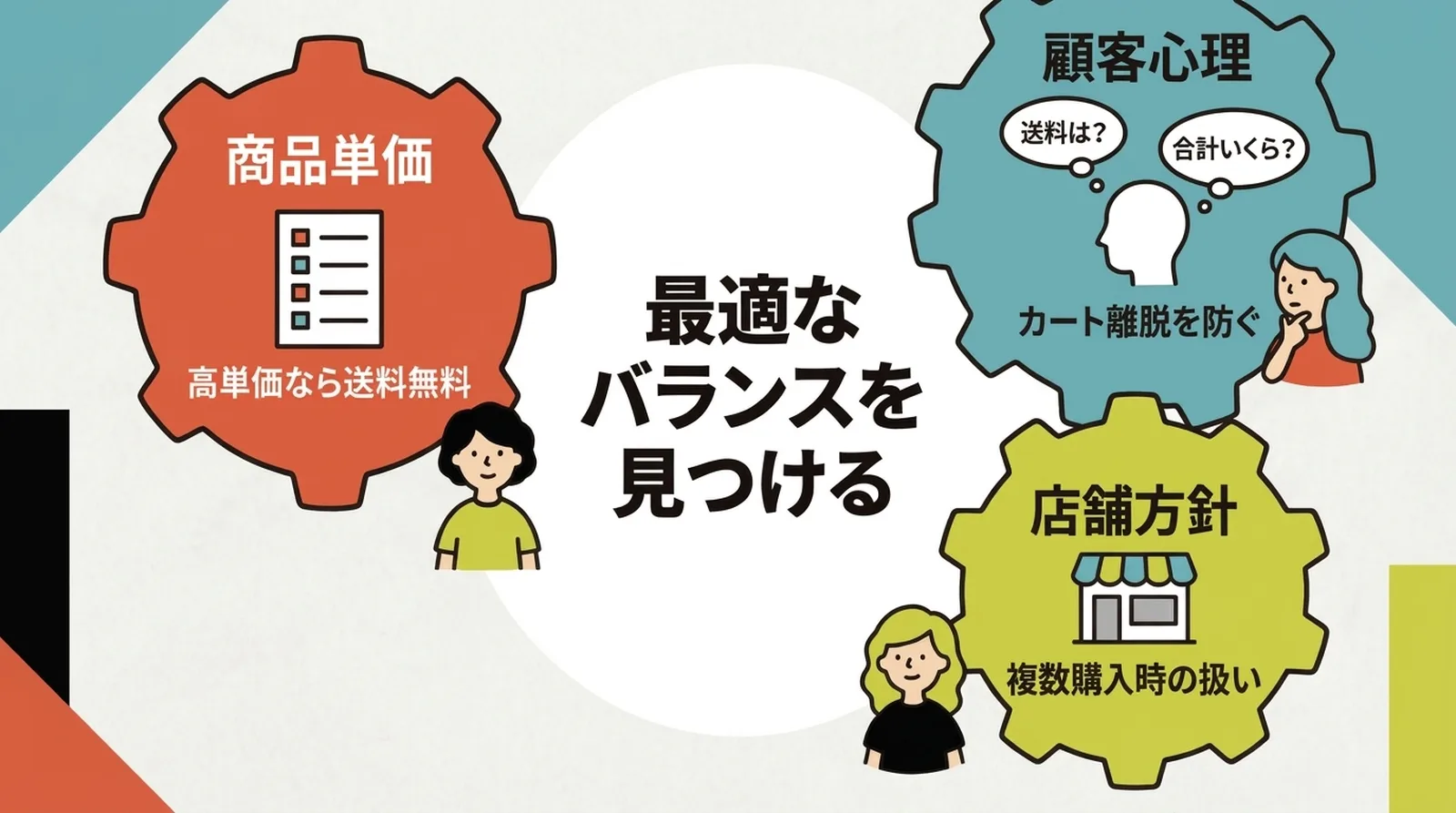
In my own store, I generally use separate shipping. There are three main reasons.
1. Product prices vary a lot
Some items are around 1,500 yen while others are 2,000 to 3,000 yen. A single “shipping included” approach becomes harder to manage cleanly when the price range is wide.
2. I want multi-item orders to combine naturally
If customers buy two or more products at the same time, I usually ship them together. With shipping included in each product price, it becomes easy to overcollect shipping unless I add more complex rules.
3. Clear shipping disclosure feels more trustworthy for my audience
For handmade products, I often feel that directly stating the shipping fee builds trust better than hiding it inside a “free shipping” label.
That said, this is a choice that fits my own products and customer base. Another store could reasonably make the opposite choice.
A Practical Middle Ground: Free Shipping Above a Threshold
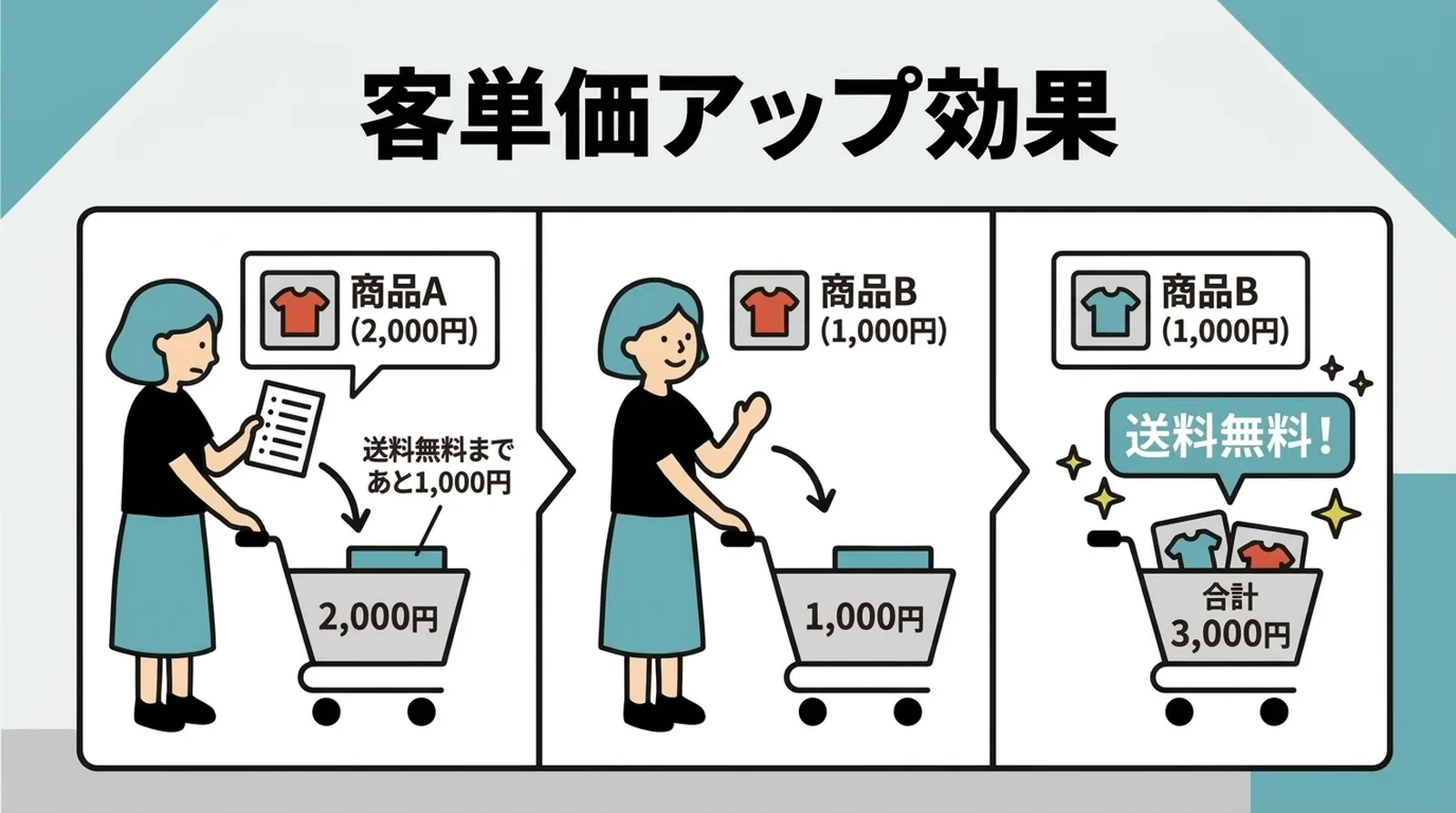
It does not have to be a strict binary choice. A threshold model such as Free shipping over 3,000 yen often gives a better balance.
It can raise average order value
Once customers see that they are only a little short of the free-shipping line, they often consider adding one more product. This keeps the appeal of free shipping while still allowing you to charge shipping on smaller orders.
How to choose the threshold
The most effective threshold is usually just above your average order value. If the store’s average order value is 2,500 yen, a threshold around 3,000 yen may be more effective than something far higher.
If the threshold is too far away, customers tend to ignore it.
Why Lower Shipping Cost Helps Either Strategy
Regardless of whether you include shipping in the item price or charge it separately, lower shipping cost makes the decision easier.
Click Post’s 185-yen flat rate is relatively low compared with many alternatives. That helps in both cases:
- If shipping is included, the visible item-price increase is smaller
- If shipping is charged separately, the extra cost feels less painful
That means reducing the shipping cost itself improves your flexibility no matter which pricing model you choose.
Common Questions
Q. Which approach is better for sales?
Higher-priced items often benefit more from shipping-included presentation because the shipping share is small. Lower-priced items may perform better with separate shipping because the visible product price stays lower.
Q. How do I set up free shipping in Shopify?
You can do it from Settings -> Shipping and delivery by editing the shipping profile and setting the shipping rate to zero. You can also create threshold-based free shipping from the same area.
Q. Won’t including shipping reduce my profit?
If you simply shift the shipping cost into the item price, the total amount collected can stay the same. The bigger concern is not the math itself, but how the higher visible item price affects customer comparison and conversion.
Conclusion
Whether shipping should be included in the item price or charged separately depends on product price, shipping ratio, customer behavior, and how you want the store to feel.
For higher-priced products, free-shipping presentation often works well because the shipping share is relatively small. For lower-priced items, separate shipping can make the product price feel more accessible. A threshold-based model is often a practical compromise.
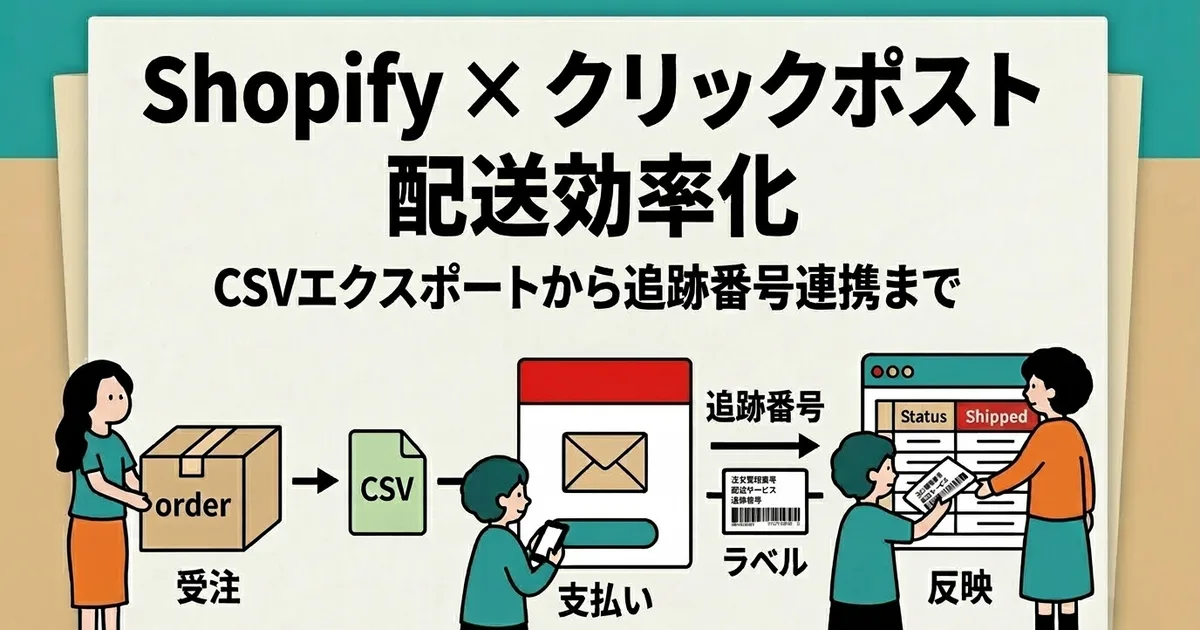
Whichever path you choose, lower shipping cost gives you more room to design the experience well. If you use Click Post and want to streamline the operational side as well, try Instant Shipping! for Click Post.