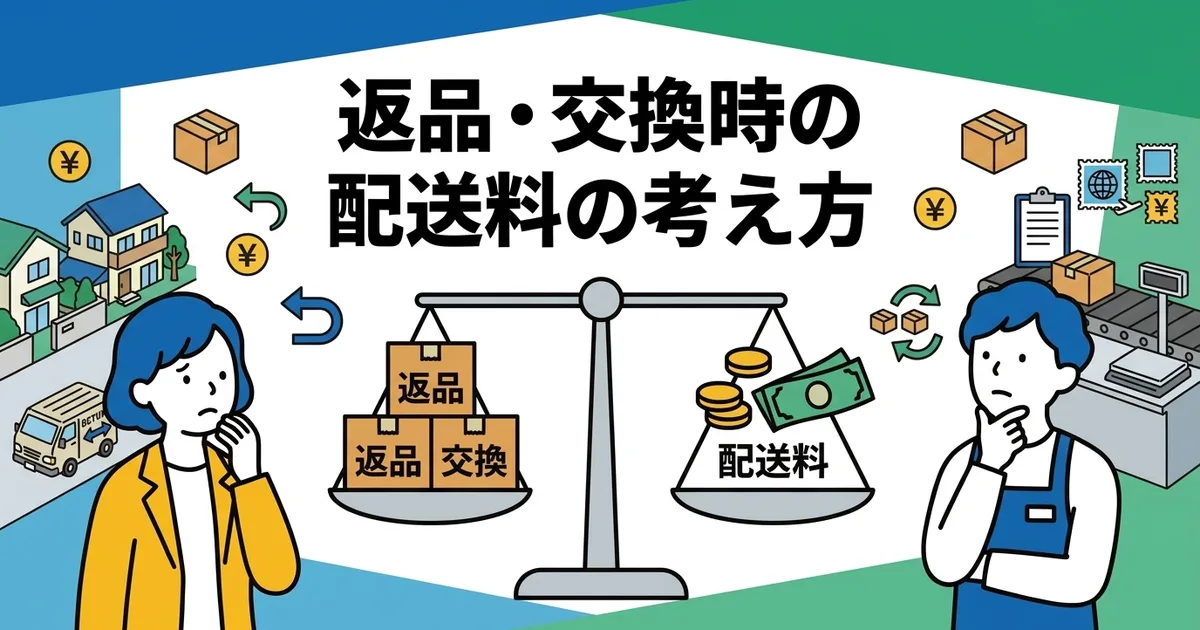
How to Think About Shipping Costs for Returns and Exchanges
If you run a Shopify store, returns and exchanges are part of the job. A product may have a defect, the size may be wrong, or the customer may simply decide it is not what they expected. In every case, one question appears quickly: who pays for the shipping cost?
The best answer is not to decide case by case in the moment. It is to define the rules in advance as part of your store policy.
This article organizes the practical side of return and exchange shipping from the perspective of a small store operator.
Understand the Cost of a Return or Exchange
There are usually two shipping legs
One detail people often underestimate is that returns and exchanges often involve round-trip shipping cost.
The customer sends the product back, and then, in an exchange case, you send the replacement out again. If both use Click Post, that alone becomes 370 yen in additional shipping, before you even think about the original outbound shipment.
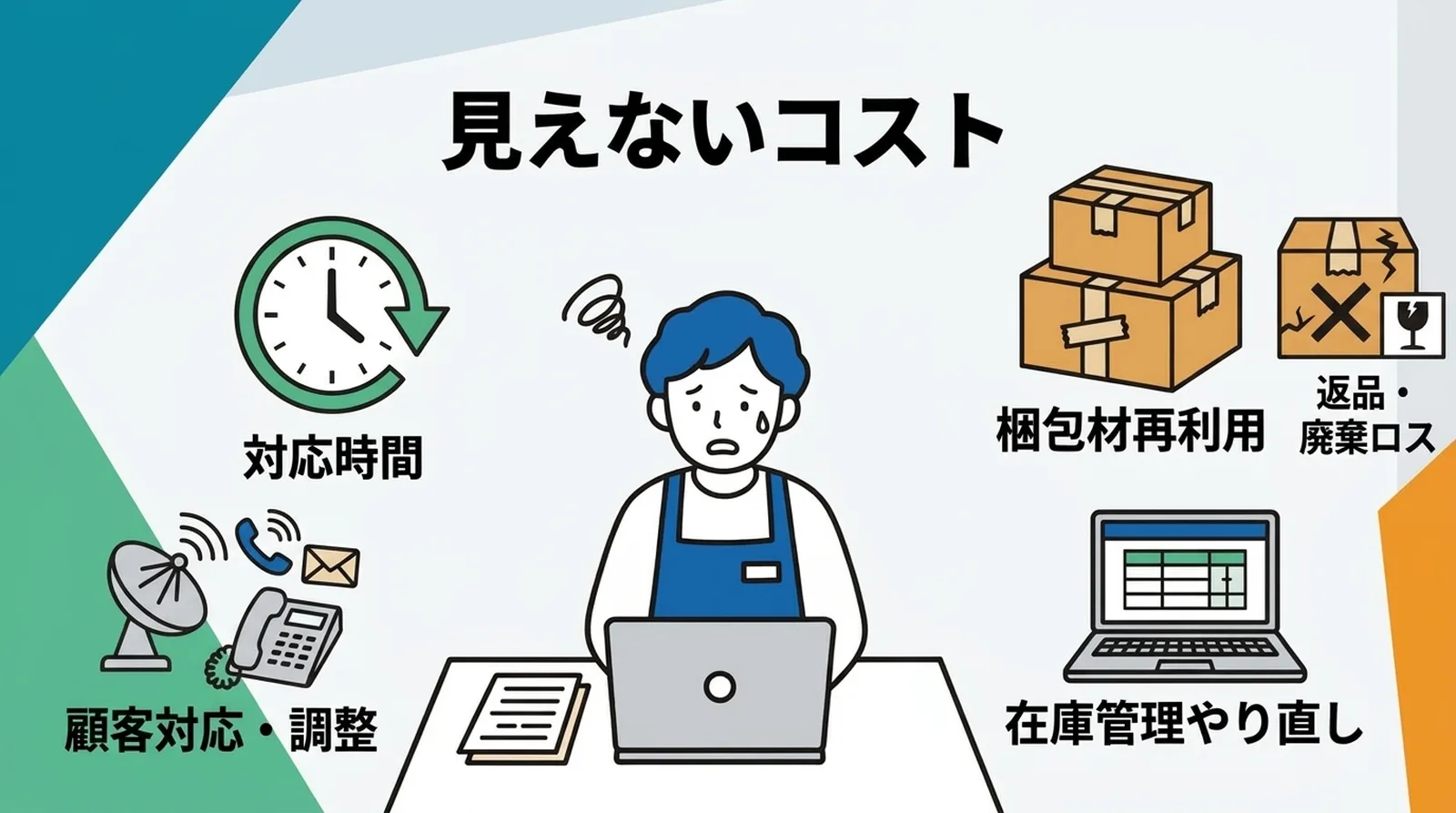
Shipping cost is not the only cost
There is also the time spent handling messages, inspecting the returned item, repacking, updating stock, and processing the replacement. In practice, the operational side can matter almost as much as the shipping fee itself.
Typical Patterns for Who Pays
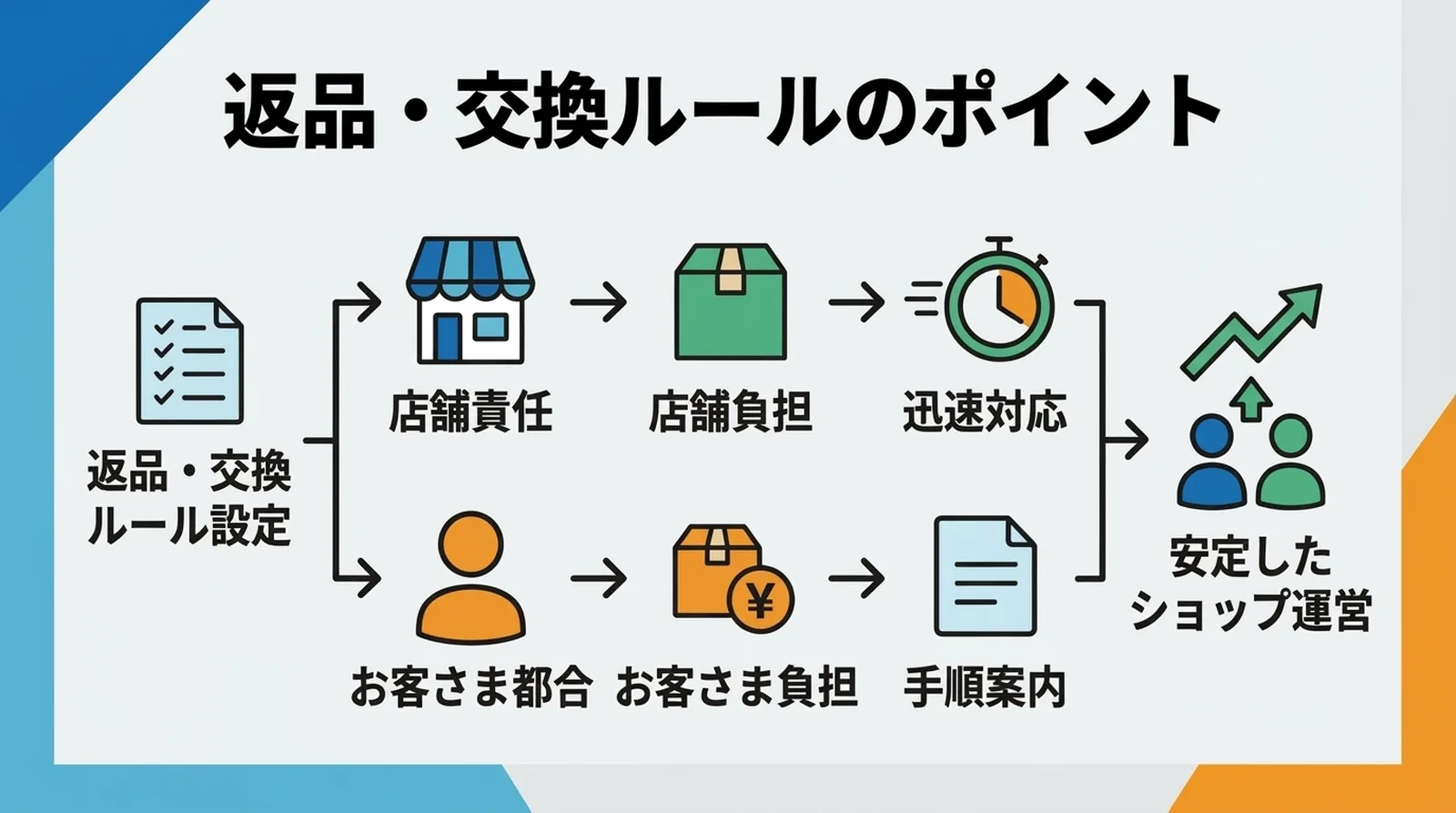
Pattern 1: Store-caused issues are paid by the store
If the problem was caused by the store, such as a defect or shipping mistake, the store covers the cost. This is the most standard and reasonable approach.
Pattern 2: Customer-caused returns are paid by the customer
If the return is based on preference or ordering error, it is common to have the customer cover the return shipping cost.
When you do this, do not just say “Please return it at your expense.” It is much better to clearly explain the return address, recommended shipping method, and packing instructions.
Pattern 3: The store pays in every case
Some small stores prefer to keep things simple and absorb return shipping in all cases. This can improve customer satisfaction, but it only works if return frequency and margin leave room for it.
| Cause of return | Who pays | Note |
|---|---|---|
| Defect or shipping mistake | Store | Standard |
| Preference or ordering mistake | Customer | Should be written in policy |
| Grey-area case | Store judgment | Requires flexibility |
Can Customers Use Click Post for the Return?
Usually not as a universal instruction. Click Post requires account setup and payment configuration, so it is not always a practical return method for the customer.
More realistic return methods to suggest
- Standard mail for low-risk lightweight items
- Yu-Packet when tracked return shipping is preferred
- Letter Pack Light for items that need tracking and fit the format
In some cases, you can include a prepared return label, but doing that for every shipment increases cost and complexity.
Build Some Return Cost into Pricing
Estimate the annual cost from your return rate
It helps to treat returns as something that will happen occasionally rather than as a surprise every time.
For example, if you ship 100 orders per month and your return rate is 2%, that means about two returns per month. If each return case costs 500 yen in shipping and labor, that becomes 1,000 yen per month or 12,000 yen per year.
Spread across 100 monthly shipments, that is only about 10 yen per order. It is not a huge amount, but being aware of it leads to much more accurate pricing decisions.
Work on lowering the return rate itself
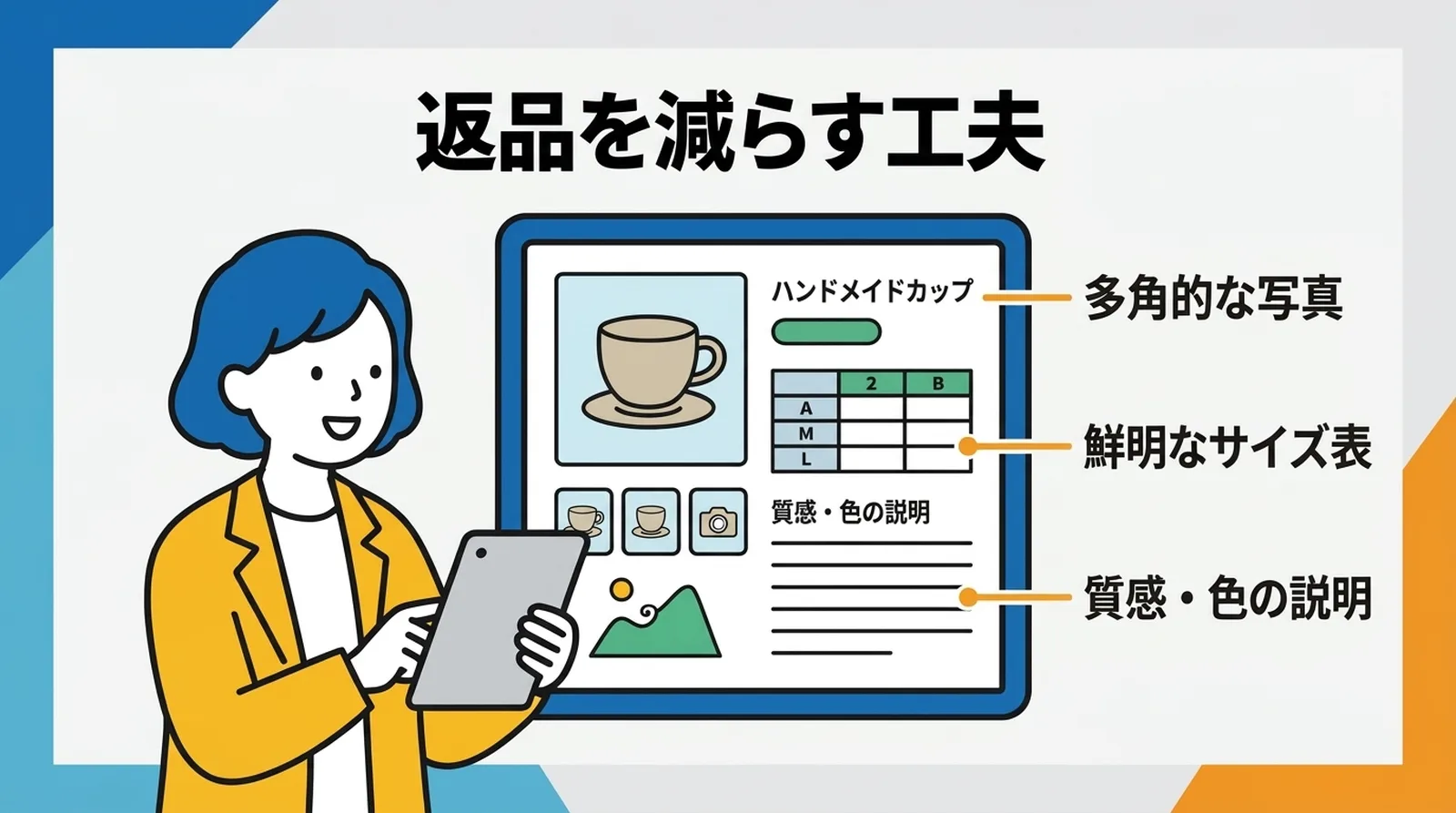
Do not only plan for return cost. Also reduce returns where possible.
- Add more product photos from different angles
- State size and specifications more clearly
- Add notes about material feel and color variation
Small clarifications can prevent a surprising number of misunderstandings.
For more on margin and shipping design, see when free shipping becomes realistic.
What to Include in a Return Policy
Minimum items to state clearly
Your policy page should ideally include:
- The return or exchange time limit
- Conditions that are excluded from returns, such as used items or custom-made products
- Who pays shipping in store-caused versus customer-caused cases
- The return procedure, including contact point and return address
- Refund timing and method
When those items are written clearly, both you and the customer have a stable reference point when a return happens.
Put the policy where people can actually find it
A return policy hidden only in the footer is easy to miss. It helps to link it from product pages or near checkout as well.
How to Reduce the Work of Reshipping
If an exchange is needed, you still have to ship the replacement. That means your normal shipping workflow matters even more.
The more efficient your usual process is, the less disruptive reshipping becomes. If CSV export, label creation, and tracking sync already run smoothly, exchange handling becomes much easier to absorb operationally.
For the broader shipping workflow, see the Shopify x Click Post efficiency guide.
Common Questions
Q. What return rate is common?
It varies by category. Apparel tends to be higher, while handmade goods and small accessories are often lower. The important part is to measure your own store rather than relying only on general numbers.
Q. Will a strict return policy reduce purchases?
A policy that feels too harsh can raise purchase friction, but a clear policy often improves trust more than a vague one does.
Q. Do handmade products also need a return policy?
Yes. Many handmade stores limit customer-convenience returns, but they still need to explain how they handle defective or incorrect items.
Q. How can I reduce the cost of repeated reshipping?
First reduce return frequency by improving product information. Then reduce the operational burden by making your normal shipping flow as efficient as possible.
Conclusion
The most important step in managing return and exchange shipping costs is deciding the rules before the problem happens.
- Separate the policy for store-caused and customer-caused cases
- Estimate the annual return cost and build a small amount into pricing
- Reduce return frequency through clearer product information
- Place the return policy where customers can find it easily
Once those pieces are in place, returns become much less stressful to handle. If you want your daily shipping flow to stay efficient even when exchanges happen, try Instant Shipping! for Click Post.