When Does Free Shipping Become Realistic? Balancing Margins and Conversion
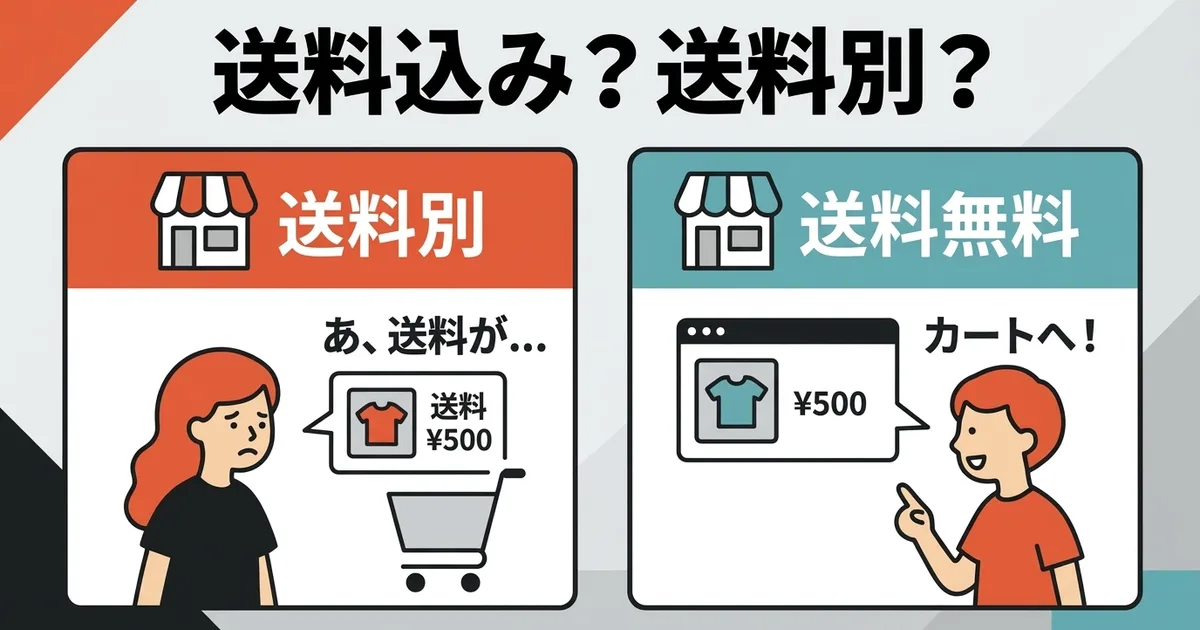
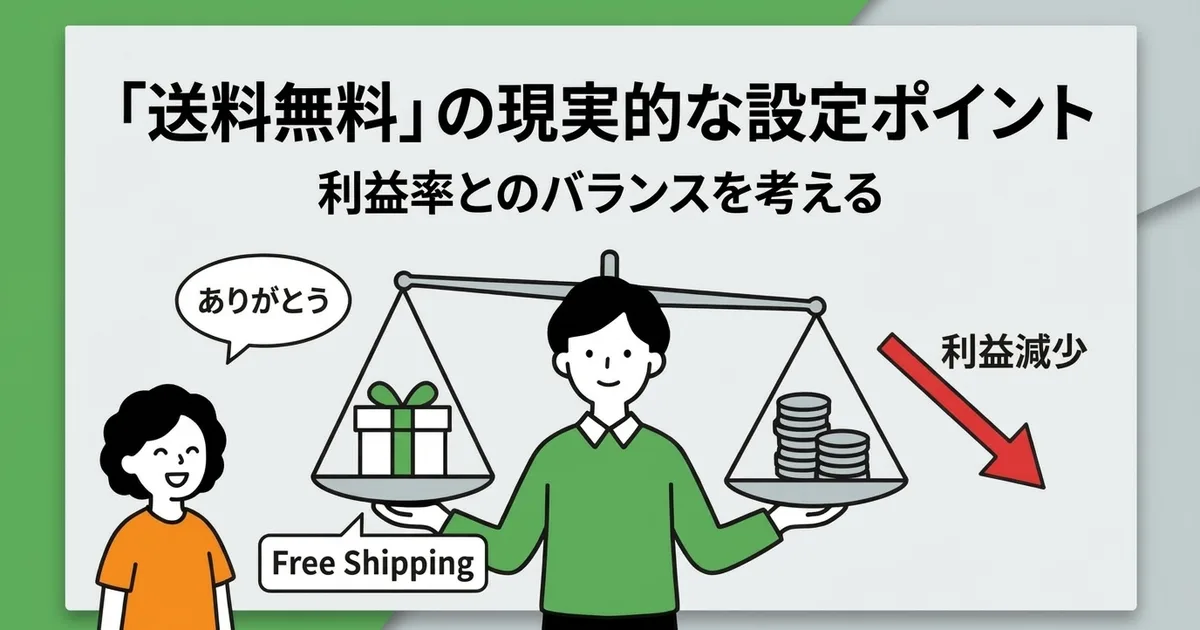
“Free shipping” is a strong purchase trigger for customers. But the shipping cost does not disappear. Someone still has to absorb it.
As both a merchant who has struggled with shipping design and a developer who built a tool to reduce shipping work, my real conclusion is that the question is not simply whether to offer free shipping. The more important question is under what conditions it makes sense.
This article breaks down how small Shopify stores can design free shipping realistically by looking at product price, profit margin, and order value.
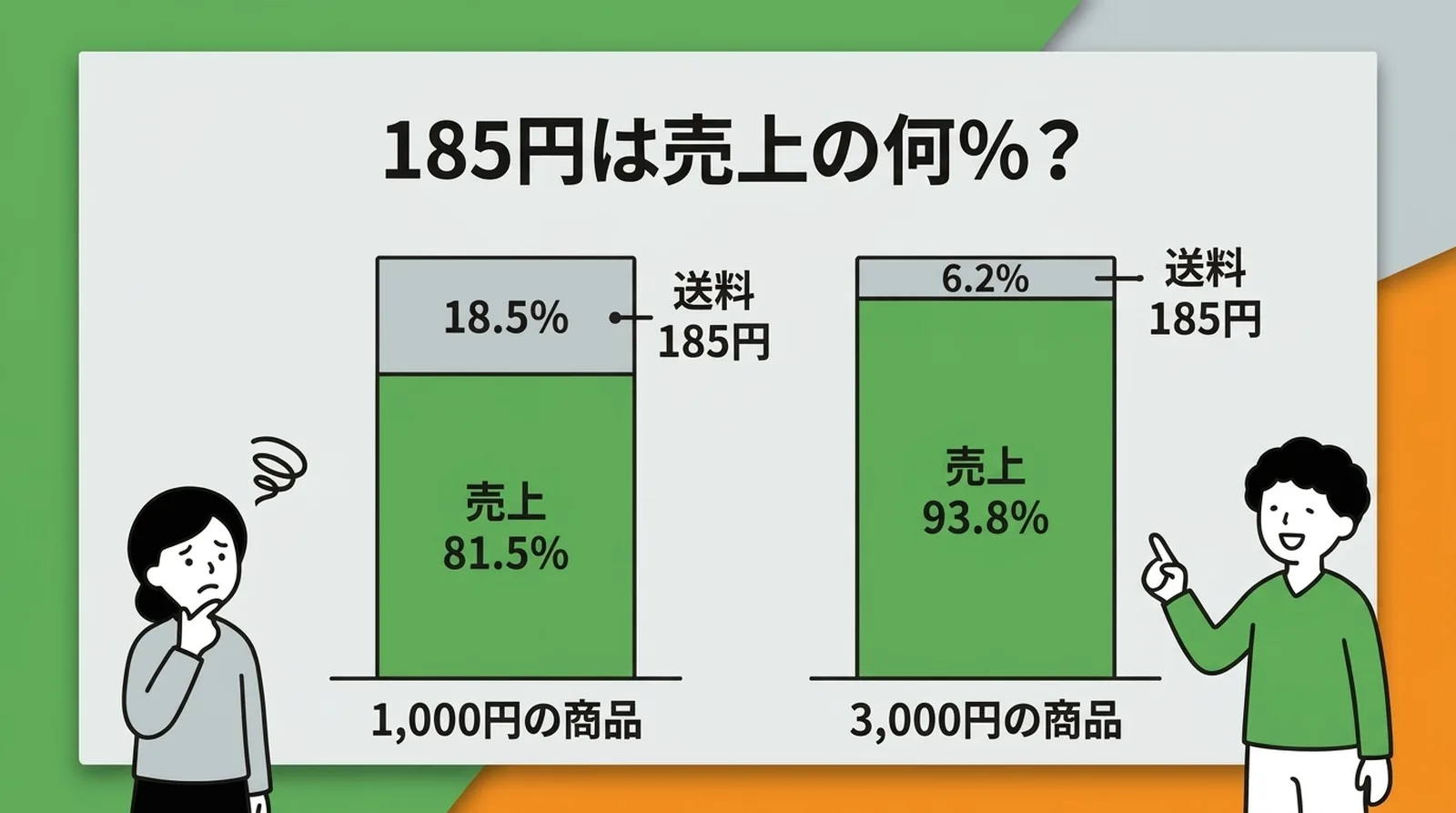
How Much of Your Sales Does 185-Yen Shipping Actually Consume?
Click Post shipping is a flat 185 yen nationwide. Let’s look at how large that amount is relative to the product price.
| Product price | Shipping as a percentage of revenue |
|---|---|
| 500 yen | 37.0% |
| 1,000 yen | 18.5% |
| 1,500 yen | 12.3% |
| 2,000 yen | 9.3% |
| 3,000 yen | 6.2% |
| 5,000 yen | 3.7% |
If your product is 1,000 yen, the shipping cost already represents 18.5% of the sale. If you absorb that yourself, it comes directly out of your gross margin.
At 500 yen, the percentage becomes 37%, which makes unconditional free shipping extremely difficult to sustain.
Once product price rises above 3,000 yen, the impact of 185 yen becomes much smaller. That is when free shipping starts becoming more realistic.
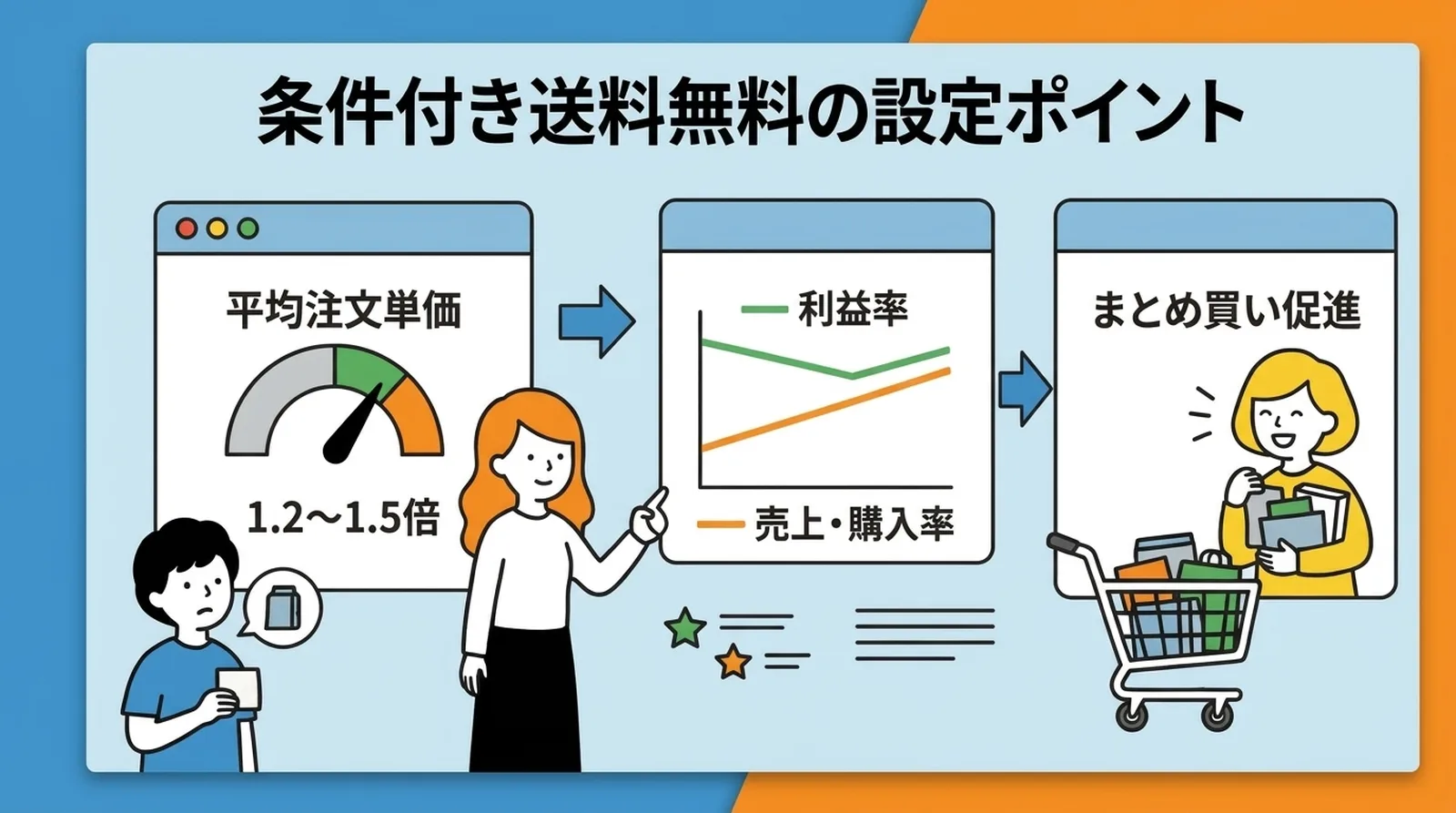
Three Practical Ways to Offer Free Shipping
Pattern 1: Include shipping in the product price
This means building the shipping cost into the item price itself. For example, turning a 1,000-yen product into a 1,185-yen “free shipping” product.
- Advantage: very simple for customers to understand, and “free shipping” tends to lift conversion
- Disadvantage: the product may look expensive when compared with stores that display shipping separately
This works best when your products are distinctive enough that buyers are not doing direct price comparisons everywhere. Handmade items and original products often fit this pattern better than standardized goods.
Pattern 2: Offer free shipping above a certain order value
This is the common “Free shipping on orders over X yen” model. It is easy to set up in Shopify and often gives a better balance between conversion and profit protection.
The key question is where to set the threshold.
| Free-shipping threshold | Expected average order value | Shipping as a share of revenue | Effect on profit |
|---|---|---|---|
| 2,000 yen | 2,500 yen | 7.4% | Small |
| 3,000 yen | 3,500 yen | 5.3% | Light |
| 5,000 yen | 5,500 yen | 3.4% | Very small |
A common rule of thumb is to place the threshold at around 1.2 to 1.5 times your current average order value. That can encourage add-on purchases without making the target feel unrealistic.
Pattern 3: Do not offer free shipping at all
There is nothing wrong with showing shipping as a separate cost.
Click Post’s 185-yen flat rate is already relatively low compared with other shipping options. For many stores, clearly stating “Flat nationwide shipping: 185 yen” is more sustainable than forcing free shipping and shrinking margins too much.
This is especially true if your products are under 1,000 yen or your gross margin is already tight.
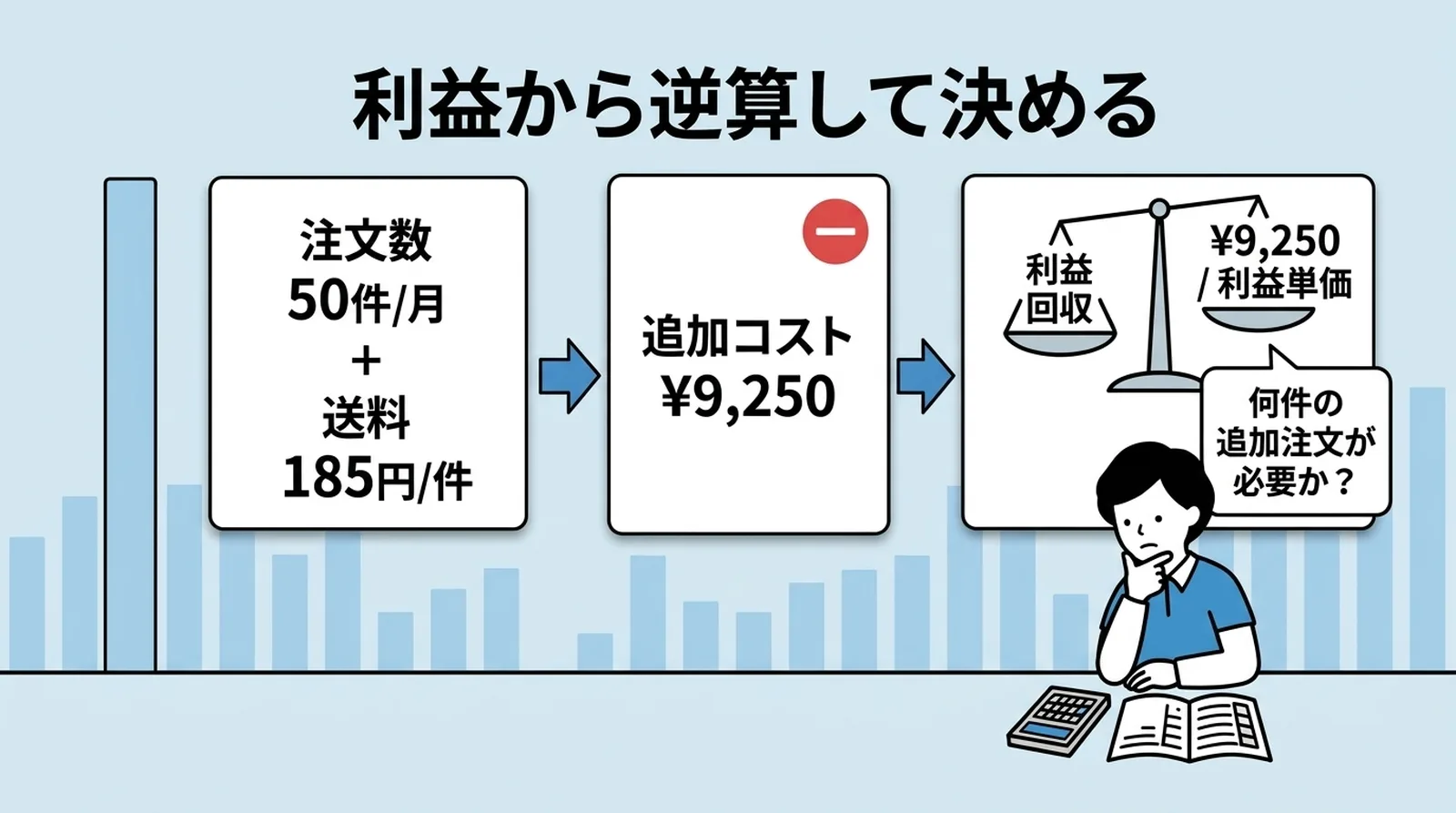
Work Backward from Profit, Not Just from Marketing
Example: a 2,000-yen product
Let’s compare a 2,000-yen product with a 35% cost rate.
If shipping is charged separately:
- Revenue: 2,000 yen
- Cost of goods: 700 yen
- Gross profit: 1,300 yen
If you absorb 185-yen shipping:
- Revenue: 2,000 yen
- Cost of goods: 700 yen
- Shipping absorbed: 185 yen
- Gross profit: 1,115 yen
That means gross profit drops from 1,300 yen to 1,115 yen. Whether that tradeoff is worthwhile depends on whether free shipping actually increases orders enough to compensate.
Thinking in terms of break-even
If your store ships 50 orders per month, absorbing 185 yen each time adds 9,250 yen in monthly shipping cost.
If your profit per order after absorbing shipping is 1,115 yen, you would need roughly 9 additional orders per month to offset that extra shipping cost.
That is why running a limited-time free-shipping campaign and measuring the results is often the safest way to test the idea.
How I Handle It in My Own Shop
For a long time, I kept shipping separate in my own store. Products like TRRS cables and resin keycaps are relatively niche and handmade, so customers were not especially resistant to a 185-yen shipping charge.
However, when I added lower-priced products such as stickers, the shipping share became much larger relative to the item price. In those cases, a threshold model made more sense, so I introduced “Free shipping on orders over 2,000 yen” to encourage multi-item purchases.
That led to more customers combining items in a single order, and the average order value increased.
Still, that does not mean the same threshold works for every shop. The right answer depends on your product mix, pricing, and customer behavior.
How to Set Up Conditional Free Shipping in Shopify
To set up threshold-based free shipping in Shopify:
- Open
Settings -> Shipping and delivery - Edit the relevant shipping profile
- Add a new rate with price set to
0 yen - Add a condition based on order value, for example
2,000 yen or more - Save
Orders above the threshold will now qualify for free shipping, while smaller orders will still be charged the normal rate.
To make this effective, also show the threshold on product pages or in store messaging. Customers cannot respond to a free-shipping threshold they do not know exists.
Common Questions
Q. Won’t free shipping push me into the red?
It depends on your margin. If you have a healthy gross margin and a product price above around 2,000 yen, absorbing 185 yen may still leave enough profit. If your price is 500 to 1,000 yen or your margin is already tight, free shipping can hurt quickly.
Q. What is a good threshold for “free shipping over X yen”?
A practical starting point is around 1.2 to 1.5 times your average order value. For example, if your average order value is 1,500 yen, testing 2,000 to 2,500 yen is reasonable.
Q. Which is more effective, free shipping or point rewards?
In general, free shipping is easier for customers to understand and often has a stronger effect on first-purchase conversion. Point rewards can be useful for repeat purchasing, but free shipping tends to lower the initial purchase barrier more clearly.
Q. Will a free-shipping threshold always raise average order value?
Not always. If the threshold is too far above your normal order value, customers may ignore it. That is why choosing a realistic threshold matters.
Conclusion
Free shipping is attractive to customers, but it is still a cost that someone has to absorb. If you introduce it without thinking through the numbers, you can end up with higher sales but weaker profits.
The main takeaways are simple:
- Click Post’s 185-yen flat rate is low, but its impact is still large on low-priced products
- Full free shipping works best when product price and margin leave room for it
- Threshold-based free shipping is often the most realistic option for small stores
- Charging shipping separately can still be the healthiest choice depending on your products
- If you are unsure, test it as a time-limited campaign and measure the result
If you also want to reduce the operational side of shipping, not just the pricing design, try Instant Shipping! for Click Post.