

How to Set Realistic Shipping Lead Times for a Side Business
If you run your store alongside a main job, shipping every day may not be realistic. That does not mean customers will lose trust. The real problem is not slower shipping by itself. It is unclear expectations.
This article explains how to choose a shipping schedule you can actually keep and how to communicate it clearly in Shopify.
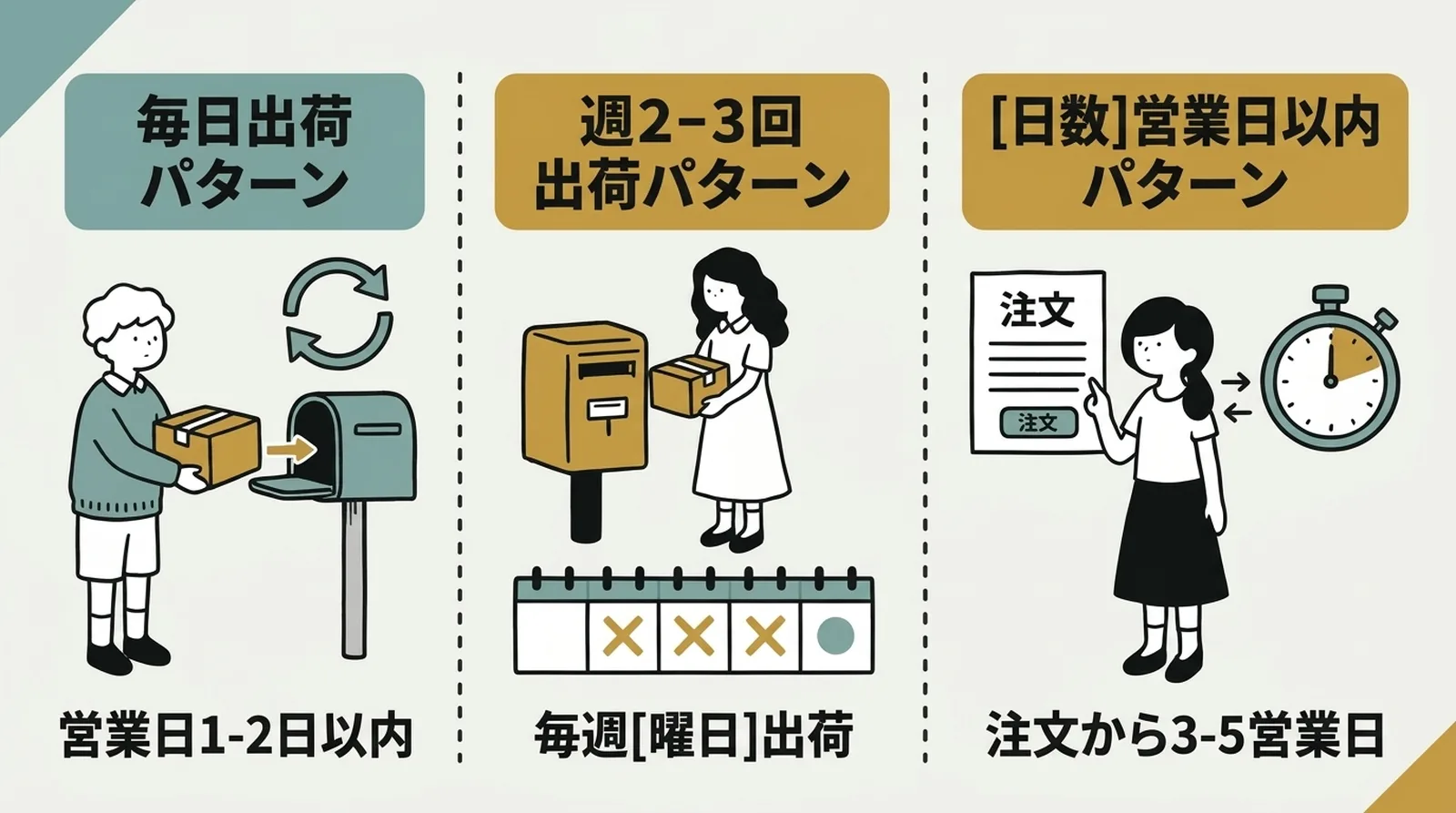
Choose a Shipping Pattern That Matches Your Life
Most small stores fit into one of these patterns:
| Pattern | Best for | Example wording |
|---|---|---|
| Daily shipping | Full-time sellers | Ships within 1 to 2 business days |
| Fixed weekdays | Side businesses | Ships every Monday, Wednesday, and Friday |
| Within X business days | Irregular schedules or made-to-order work | Ships within 3 to 5 business days |
The important thing is not choosing the fastest pattern. It is choosing one you can keep.
Lead time should be based on the slowest realistic case, not the best-case speed.
How to Decide the Number
Start by identifying actual shipping days
Look at your week and mark the days when you can realistically pack and post parcels. If those days are Monday, Wednesday, and Friday, build the promise around that reality.
Use the slowest case as your base
If an order arrives Friday night and your next shipping day is Monday, that gap has to be part of your public promise.
Add one day of buffer if needed
Unexpected overtime, illness, or a heavy order week can happen. Adding one extra day of safety is often enough without making your store feel slow.

Communicate It in Three Places
Use the same message consistently in:
- Product pages
- Your shipping policy
- The Shopify order confirmation email
That repetition helps customers feel informed instead of uncertain.
Example wording
Shipping schedule
Ships every Monday, Wednesday, and Friday
Delivery method: Click Post with tracking
Estimated delivery: 1 to 3 days after shipment
If you want to understand the policy side more deeply, How to Write a Legal Notice and Shipping Policy is the next article to read.
Handling Busy Periods
When an event, sale, or promotion is coming, update the schedule before customers feel the delay.
- Extend the displayed lead time temporarily
- Add a notice on product pages or the homepage
- Return to the normal schedule after the busy period ends
It is much better to ship earlier than promised than later than promised.
Keep Making Time Protected
Shipping schedules are not just a customer-facing promise. They are also a way to protect your own production time.
Once the shipping days are fixed, the non-shipping days can be used for making, photography, or shop updates without constant interruption. For the broader operational side, How to Balance Making Products and Shipping Orders expands on that idea.
Common Questions
Is next-day shipping better for sales?
It can help, but only if you can keep it consistently. A slower promise that is kept is better than a fast promise that breaks.
How should made-to-order products be handled?
Separate the production time from the shipping time so customers can understand the full timeline.
Should I contact customers if shipping will be late?
Yes. A short message before the promised window is missed helps protect trust.
Summary
Realistic shipping lead times are built from your actual schedule, not from ideal expectations. Decide on a pattern you can keep, base the promise on the slowest normal case, and repeat that message across your store.
That clarity lowers support stress for both you and the customer. If you also want to shorten the time spent on the shipping task itself, you can try Instant Shipping for Click Post.