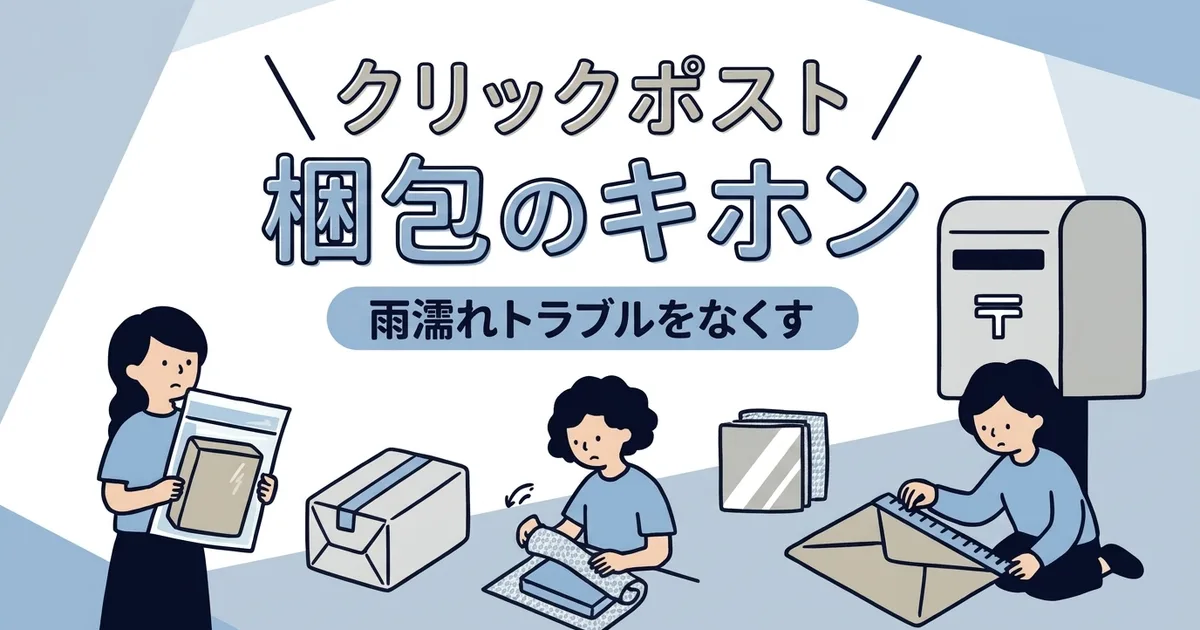
Packing to Prevent Breakage and Rain Damage on Click Post: Covering the No-Insurance, Mailbox-Delivery Risk
Click Post has no shipping insurance. Whether something arrives broken or soaked from rain, Japan Post will not cover it — reship and refund costs fall entirely on the shop. Which means the real battleground for trouble prevention is packing.
This article covers the two biggest risks on Click Post — breakage (drop impact and pressure) and rain damage — and how to prevent both within the 3 cm thickness ceiling. Over three years and more than 2,200 shipments on Shopify, tightening packing is how I got my water-damage and breakage complaints down to zero. Below are the specific changes that move the needle, with product-category examples.
Key takeaways
- Breakage: for fragile items, use double bubble wrap plus a rigid envelope. If the packed parcel exceeds 3 cm, switch to Letter Pack Plus.
- Water damage: put every product in an OPP bag (2 to 5 yen each — the best cost-to-effect ratio in the whole workflow).
- 3 cm limit: tune the parcel in 1 to 2 mm steps by combining the right cushioning and envelope.
Why Mailbox Delivery Needs Extra Packing Care
The package is not handed over in person
With Yamato Takkyubin or Yu-Pack, the parcel is handed directly to the recipient. Click Post works differently — delivery is completed when the parcel is dropped into the mailbox, so it sits inside the box until the customer picks it up.
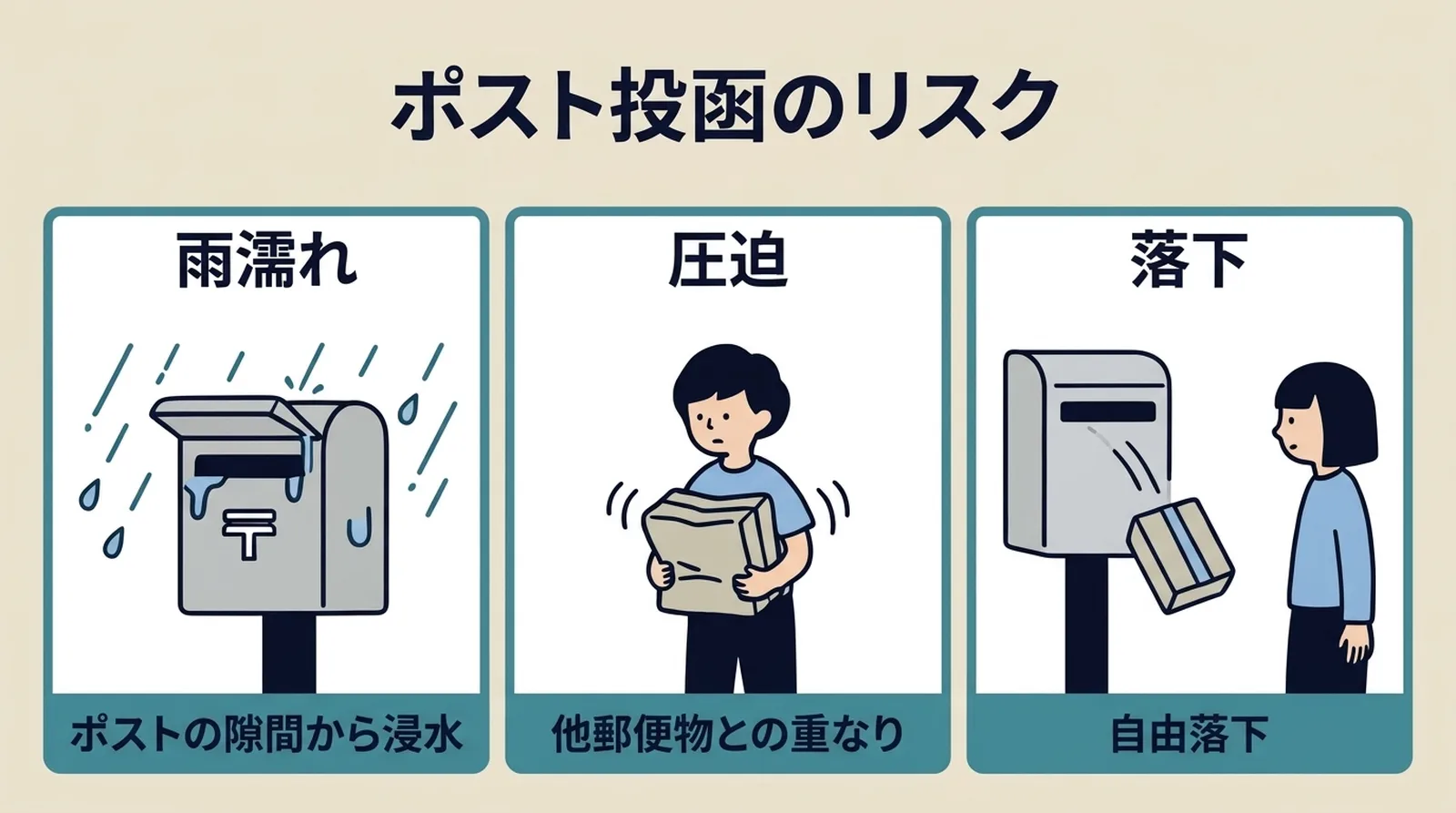
That waiting time creates risk. Rain can enter through gaps in the mailbox lid. Other mail piling up can press on the parcel. The insertion itself can deliver a small drop. None of these are rare.
Three risks to plan for with mailbox delivery
| Risk | Cause | Typical situation |
|---|---|---|
| Rain damage | Water entering through mailbox gaps | Rainy days or long delays before pickup |
| Compression | Other mail and flyers pressing on the parcel | Crowded mailbox |
| Drop impact | Small fall when inserted into the mailbox | Deeper or older mailboxes |
Most of these can be blocked through packing choices. What makes packing more important on Click Post than on other services is the lack of insurance. If the product is damaged in transit, you cannot claim it back from Japan Post, so packing has to do the protective work that coverage normally would.
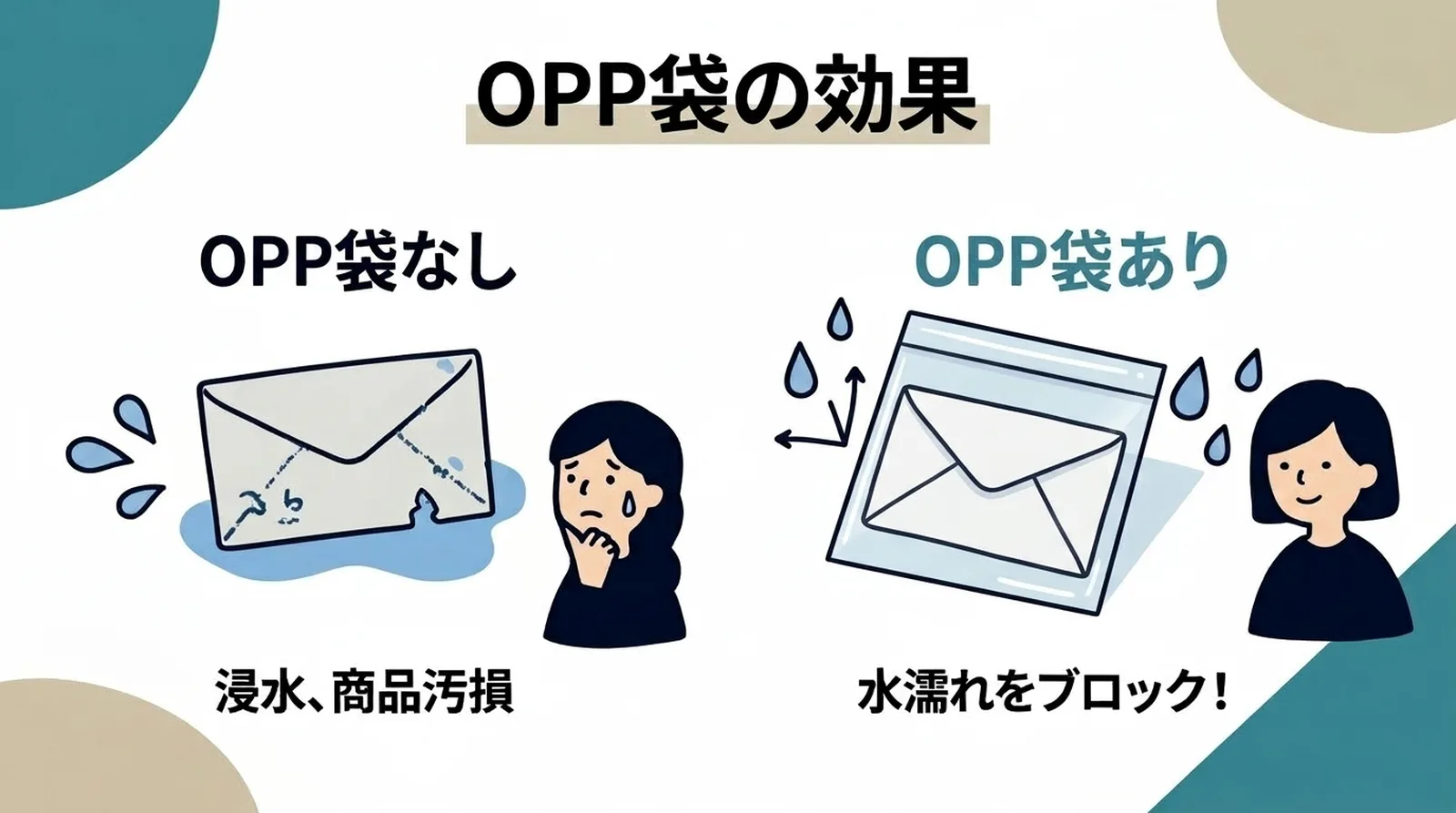
Water Protection: Why OPP Bags Are Almost Mandatory
The simplest defense with the best cost-to-effect ratio
An OPP bag is just a clear plastic sleeve, but it changes the outcome of rainy-day delivery. Put the product in the OPP bag first, then place it in the envelope. That one step sharply lowers the chance of moisture reaching the product.
Across more than 2,200 shipments, I can say from experience that once OPP bags became the default, water-damage messages simply stopped. At about 2 to 5 yen per bag, the cost-to-effect ratio is one of the best in the entire shipping workflow.
Choosing the right OPP bag
| Size | Typical use | Tape flap |
|---|---|---|
| A5 (160 x 225 mm) | Accessories, small items, cables | Recommended |
| A4 (225 x 310 mm) | Apparel, books, pouches | Recommended |
| B5 (195 x 270 mm) | Between A5 and A4, such as keycaps | Recommended |
Flap-type OPP bags skip the need for separate tape and speed up the packing flow.
Also check the envelope itself
Kraft envelopes are paper, so they absorb water. Even with an OPP bag inside, a soggy-looking envelope still looks bad when it arrives. If that bothers you, a plastic mailer is an option.
Plastic mailers cost 2 to 3 times more than kraft envelopes, though. I use a kraft envelope plus an OPP bag. The product itself is protected by the OPP bag, so a slightly damp outer envelope does not cause real damage to the customer — that is the tradeoff I accept.
Breakage Prevention: Why Things Crack or Get Crushed on Click Post
Without insurance, packing has to do the protective work
Breakage complaints on a mailbox-delivered service like Click Post typically come from three patterns: drop impact, compression, and in-transit vibration.
| Type of damage | When it happens | Main countermeasure |
|---|---|---|
| Drop impact | Free-fall into the mailbox slot, handling during sorting | Double bubble wrap, rigid or padded envelope |
| Compression | Piled with other mail and flyers, crowded mailbox | Cardboard backing, reinforcement, "handle with care" note |
| Vibration | Shaking inside delivery vans and sorting machines | Secure the product so it cannot move inside the envelope |
Because there is no compensation, every "damaged, please reship or refund" case is on the shop. Each reship costs 185 yen plus packaging, plus product cost, plus time. Adding 2 to 3 yen of reinforcement to the original packing is cheaper by a long margin.
A packing recipe for fragile and precision items
For anything that can break — ceramics, glass, resin pieces, electronics, precision parts — this layering order works well in practice:
- OPP bag (water protection)
- Double bubble wrap (drop-impact absorption, sized so the product cannot shift inside the envelope)
- Rigid or padded envelope (compression protection)
- "Fragile" sticker or stamp (no legal force, but helps handling hints during sorting)
If this stack exceeds 3 cm, do not try to force it into Click Post — switch to Letter Pack Plus (520 yen, no thickness limit, face-to-face delivery). The switching logic is covered in detail in how to deal with the 3 cm thickness limit and what to use instead.
Does a "Fragile" mark actually help on Click Post? Officially, "handle with care" markings have no legal weight and do not guarantee priority handling in transit. That said, they do provide a handling hint during sorting, so it is still worth marking fragile items.
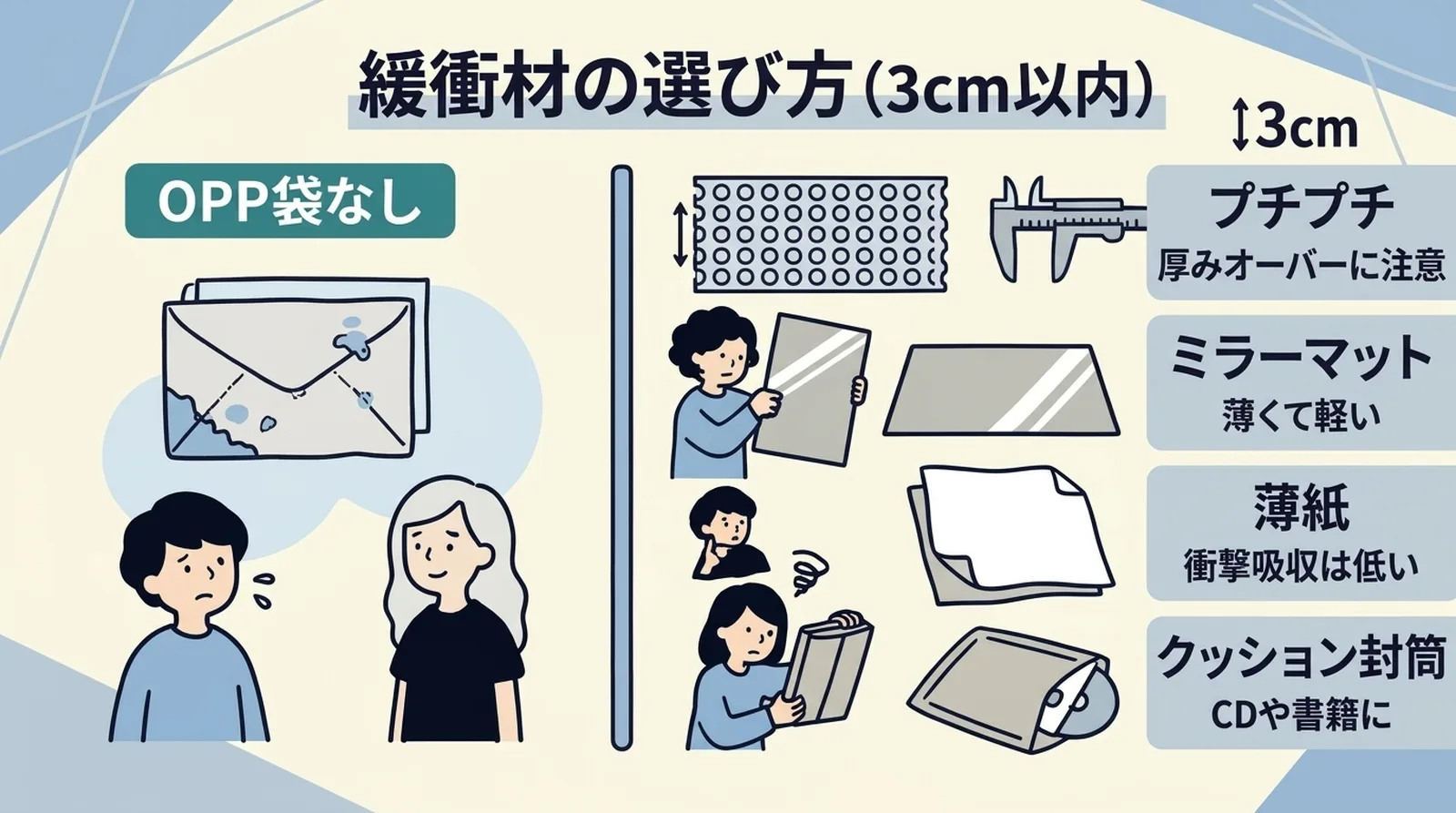
Choosing Cushioning Within the 3 cm Limit
Cushioning thickness is where packing plans live or die
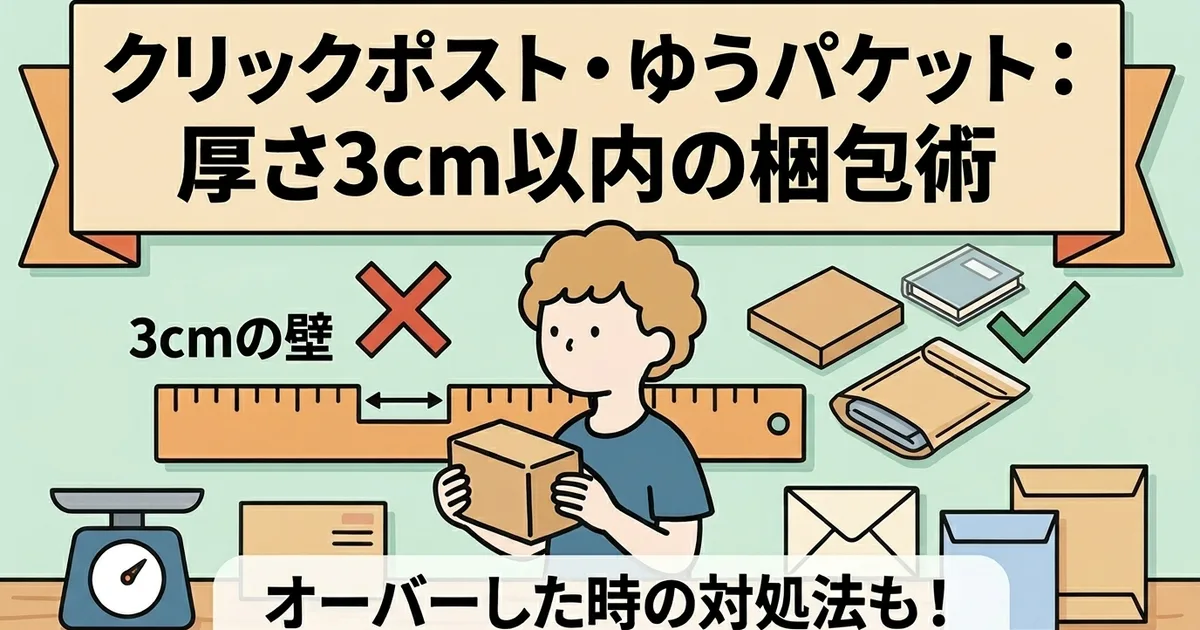
Click Post accepts parcels up to 34 cm x 25 cm x 3 cm and 1 kg. The product, the cushioning, and the envelope together have to live inside that 3 cm.
Thicker cushioning protects the product but blows the limit. Too little cushioning fails to absorb impact. This balance is the main headache of Click Post packing. For more technique on fitting inside the limit, see how to deal with the 3 cm thickness limit and what to use instead.
Cushioning comparison
| Material | Approx. thickness | Protection level | Best for |
|---|---|---|---|
| Bubble wrap, single layer | About 3 mm | High | Fragile parts, delicate items |
| Miramat foam | About 1 mm | Medium | Lightweight small products |
| Tissue paper | About 0.5 mm | Low | Scratch prevention only |
| Padded envelope | About 2 to 3 mm including envelope | Medium | Books, CDs, flat goods |
The basic logic is to balance fragility against the remaining thickness budget.
Example combinations that fit inside 3 cm
For a product that is 1.5 cm thick:
- Product (1.5 cm) + miramat top and bottom (2 mm total) + OPP bag (≈0 mm) + kraft envelope (about 1 mm) = about 1.8 cm (comfortable)
- Product (1.5 cm) + bubble wrap top and bottom (6 mm total) + OPP bag + kraft envelope (about 1 mm) = about 2.2 cm (still fits)
- Product (1.5 cm) + bubble wrap top and bottom (6 mm) + OPP bag + padded envelope (about 3 mm) = about 2.4 cm (fits but close)
Once the product itself exceeds about 2 cm, the cushioning-and-envelope options narrow sharply. Making it a habit to measure the packed parcel every time cuts down on returns.
Packing Examples by Product Type
Accessories and keycaps
Small items are usually more vulnerable to scratches than major impact.
- Put the item in an OPP bag (water protection)
- Wrap it in miramat or thin air cushion (scratch protection)
- Seal it in a kraft envelope
For resin keycaps, my combination is OPP bag + miramat + kraft envelope, which stays around 2.5 cm total.
Flexible items such as cables and straps
If the item bends without damage, you can simplify the packing.
- Put it in an OPP bag (water protection)
- Skip cushioning or use a single sheet of tissue paper
- Seal in a kraft envelope
TRRS cables are flexible enough that OPP bag + kraft envelope is usually enough, keeping total thickness around 1 cm.
Paper goods such as cards, stickers, and books
Paper is especially vulnerable to moisture, so the OPP bag is doing most of the work here.
- Put it in an OPP bag (mandatory for paper goods)
- Add a cardboard backing or cardboard insert if bending is a concern
- Seal in a kraft envelope
Stickers and cards bend easily, so OPP bag plus cardboard backing is the safer default.
Fragile items such as glass or ceramics
Honestly, sending fragile items by Click Post carries risk on its own. Between the mailbox drop and the lack of insurance, be deliberate about the choice.
- Put the item in an OPP bag
- Wrap it in bubble wrap, two layers
- Use a rigid envelope or padded envelope
- If the packed parcel goes over 3 cm, switch to Letter Pack Plus or similar
If the parcel does not fit within 3 cm, or if you are worried about damage, changing the shipping method is a reasonable choice. For a broader look at balancing packaging cost against protection, see how to optimize packaging costs.
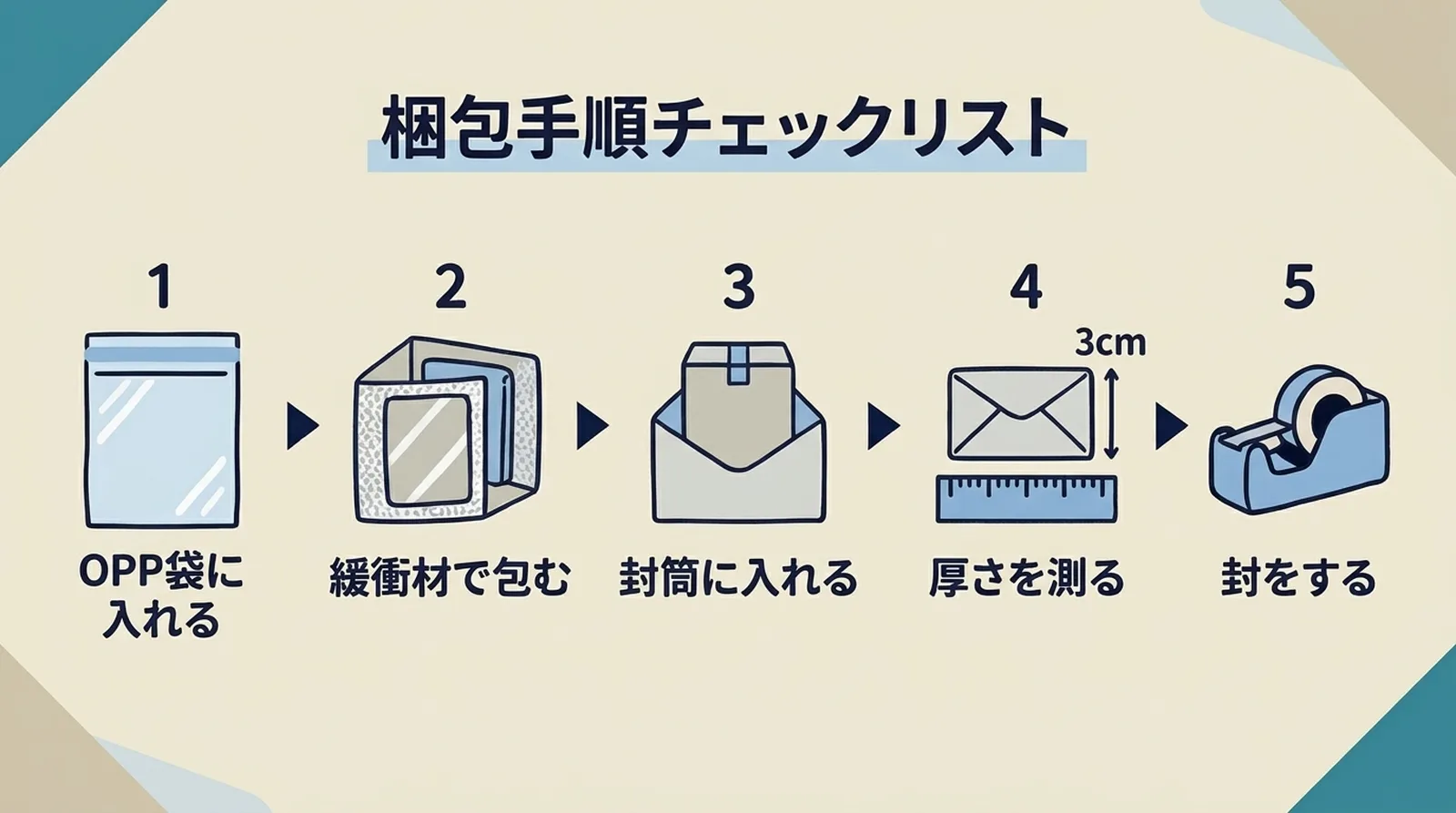
A Packing Checklist You Can Run Every Time
Use the same five-step flow:
- Put the product in an OPP bag — applies to every product. A flap-type OPP bag seals quickly.
- Add cushioning — match the material to the product's fragility
- Place it in the envelope — pick between kraft, rigid, and padded envelopes
- Measure the thickness — confirm it fits inside 3 cm. 2.7 cm or less is the safe zone.
- Seal it — tape down firmly so water cannot enter from the corners
Repeat those five steps every pack. Once they become muscle memory, each parcel takes about 30 seconds to a minute.
Common Questions
Q. Do I really need an OPP bag for every product?
Since water-damage risk never drops to zero, yes — OPP is the safe default. For 2 to 5 yen per bag, it pays back the first time a rainy-day shipment would have caused a complaint. I make OPP mandatory on every product rather than build an exception list, because "did this one get an OPP bag?" is a decision I do not want to make at 2 p.m. with 20 orders on the bench.
Q. Bubble wrap pushes me over 3 cm. What should I do?
Swap to miramat foam first — it saves 1 to 2 mm compared with bubble wrap. Miramat absorbs less impact than bubble wrap but is fine for lightweight small items. If that still overshoots, switch to Letter Pack Plus (520 yen, no thickness limit).
Q. Does Click Post come with any compensation?
No. Click Post is a flat 185-yen tracked service, but there is no coverage for in-transit damage or loss. For high-value or fragile items, consider a service with compensation built in, such as Yu-Pack or Yamato Takkyubin.
Q. Should I avoid shipping on rainy days?
You do not have to. Click Post delivers seven days a week including holidays, so weather on the day of dispatch is less of a factor than weather during mailbox waiting time. If you pack with OPP bags as the default, shipping in any weather is much safer.
Summary
Click Post's mailbox delivery introduces three practical risks — rain, compression, and drop impact — and you can defuse most of them with packing choices.
The simplest move with the biggest effect is OPP bags. Making them a rule for every product nearly eliminates water damage. For cushioning, pick based on product fragility and the remaining room inside the 3 cm limit.
Packing is a compounding practice. Bag, cushion, measure, seal — one shipment at a time. Once the routine is locked in, your hands stop hesitating.
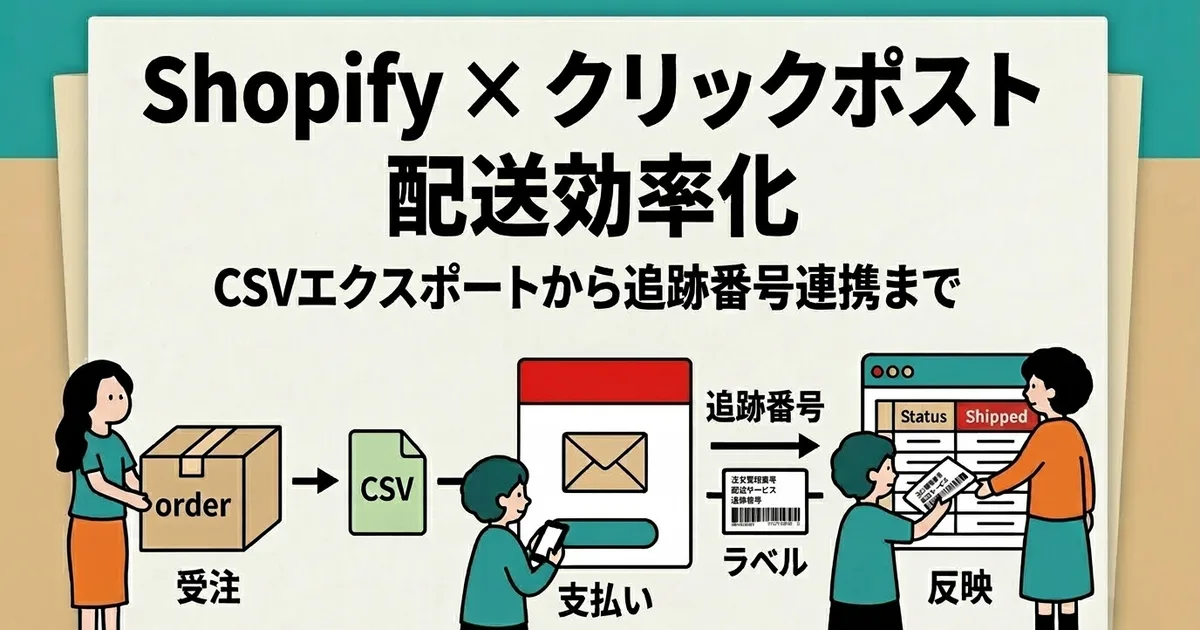
If you also want to simplify the rest of the shipping workflow, from CSV export to tracking-number sync, take a look at Instant Shipping! for Click Post.